
Animal hoarding aftermath: what a Sarasota cleanout crew
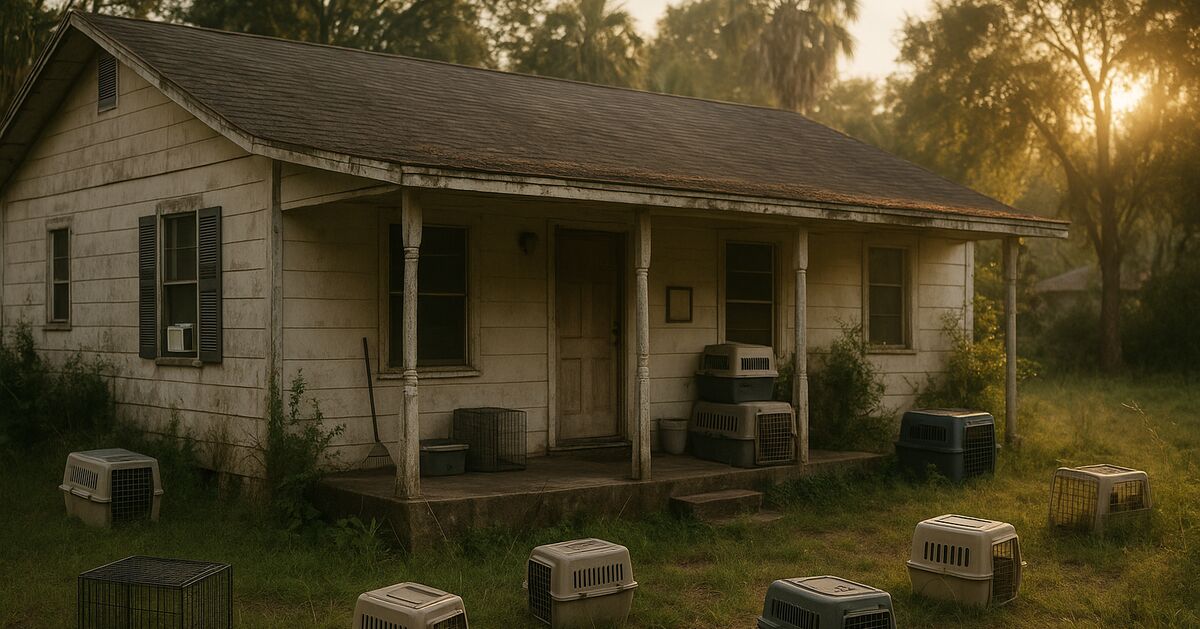
A property that housed dozens of animals, sometimes hundreds, leaves behind a kind of damage that goes far beyond ordinary clutter. Families who inherit or suddenly become responsible for one of these homes are often stunned by what they encounter, and by how complicated the cleanup turns out to be. This post walks through what a junk removal crew actually finds inside an animal hoarding property, what falls within their scope of work, and what has to be handed off to specialists before anyone should set foot in the house with a trash bag.
Why animal hoarding scenes are a category of their own
Standard hoarder cleanouts are hard work. Animal hoarding cleanouts are something else entirely. The difference is biology. When dozens of cats, dogs, rabbits, birds, or reptiles live in a confined space without adequate sanitation, the structure itself becomes saturated with waste, dander, pathogens, and, in the worst cases, deceased animals in various stages of decomposition.
The Florida Department of Health recognizes animal waste as a potential carrier of zoonotic diseases, meaning illnesses that can transfer from animals to humans. Leptospirosis, salmonella, ringworm, and toxoplasmosis are among the hazards documented in contaminated residential environments. None of that is theoretical. Crews who have worked these properties in Sarasota, North Port, and Englewood will tell you the smell hits you from the driveway, and the visible damage inside the home, stained subflooring, warped drywall, corroded fixtures, often represents only a fraction of what has soaked into the structure.
That context matters, because it shapes every decision about who does what and in what order.
What the crew actually encounters inside
Every animal hoarding property is different, but certain conditions show up again and again.
Waste saturation. Urine and feces accumulate in layers on flooring, inside walls where animals sheltered, inside HVAC ducts, and inside furniture and mattresses. Hardwood floors that appear intact are often structurally compromised underneath because the subfloor has absorbed years of urine. Carpet is often a total loss.
Deceased animals. In large-scale hoarding situations, animals die inside walls, under appliances, inside closets, and beneath accumulated clutter. A crew removing boxes and furniture may uncover remains without warning. Handling deceased animals is a separate matter from handling junk, and not something a standard hauling crew is equipped or licensed to manage.
Ammonia levels. The breakdown of urine produces ammonia gas. In a sealed or poorly ventilated home, indoor ammonia concentrations can rise to levels that cause immediate respiratory irritation and, with prolonged exposure, more serious injury. OSHA sets permissible exposure limits for ammonia in workplace settings, and severely contaminated properties can approach or exceed those thresholds in enclosed rooms without anyone realizing it. A severely contaminated animal hoarding property may reach unsafe ammonia levels in enclosed rooms without anyone realizing it.
Compromised structure. Drywall absorbs moisture and waste. Wooden framing absorbs urine over years. Subfloors rot. In some Sarasota County cases, properties have required partial demolition of interior walls not because of cosmetic damage but because the framing itself was structurally unsound after years of saturation.
Live animals still on site. If the hoarding situation was only recently discovered, or if the owner was removed due to a welfare or legal situation, animals may still be present. A junk hauling crew is not a rescue organization. They cannot, and should not, remove or house live animals.
Accumulated junk on top of the biological hazard. This is the piece that confuses families. There is often genuine clutter in these homes, furniture, boxes, clothing, appliances, layered on top of a biohazard situation. The instinct is to start hauling it all out immediately. That instinct needs to be paused until the right sequence of steps is followed.
What a junk hauling crew can handle
A professional hauling team, like the one described on our junk removal and estate cleanout services page, is genuinely useful at the right stage of an animal hoarding cleanout. Here is where they fit:
Bulk item removal after remediation. Once a licensed biohazard remediation company has assessed the property, handled deceased animals, tested air quality, and cleared the biological hazards, there is typically a significant volume of furniture, mattresses, appliances, clothing, boxes, and general junk to remove. That is exactly what a hauling crew does well.
Exterior debris. Animal hoarding situations frequently extend outside. Dog kennels, hutches, crates, broken outdoor furniture, accumulated trash, and yard debris can often be removed by a hauling crew without the same biohazard concerns that exist indoors, though protective equipment is still appropriate.
Unsalvageable furniture and flooring materials. After remediation, saturated carpet, padding, and ruined furniture need to leave the property. A hauling crew can handle that removal efficiently, particularly when the volume is large.
Coordination with the remediation timeline. A good hauling crew will work around the remediators, not compete with them. Families in Sarasota, Venice, and North Port often benefit from scheduling the hauling team to come in on the back end of a remediation project, sometimes on the same day the remediators clear out.
What a hauling crew cannot and should not handle
This is the part families need to hear before they call anyone.
Live animals. If animals are still present, the first call is to Sarasota County Animal Services or a licensed rescue organization. Attempting to remove live animals as part of a junk removal project is not appropriate and, depending on the situation, could create legal liability.
Deceased animal remains. Handling deceased animals, particularly decomposed ones, requires specific protective equipment, proper containment, and in some jurisdictions, documentation of disposal. This falls within the scope of a biohazard remediation company or a licensed animal services authority, not a junk hauling crew.
Biohazard remediation itself. Scrubbing, treating, and certifying a structure as safe after heavy biological contamination is a licensed trade. Florida does not require a specific biohazard remediation license at the state level, but companies performing this work should carry appropriate general contractor licensing, liability insurance, and training in bloodborne pathogen standards per OSHA 29 CFR 1910.1030 and related guidance. If a hauler offers to "just clean it up" without those credentials, that is a warning sign.
Air quality testing. Determining whether a home is safe to occupy after remediation is the job of an industrial hygienist or a certified indoor environmental professional. Families sometimes want to skip this step. Skipping it is a mistake, particularly in a sealed Florida home where ammonia and mold can persist invisibly after the visible waste is gone.
Mold assessment. Animal hoarding properties frequently develop significant mold, because moisture from waste and from poor ventilation creates ideal growing conditions. Florida's mold-related services law (Chapter 468, Part XVI, Florida Statutes) requires mold assessors and remediators to be licensed separately. A junk hauler cannot serve as a mold assessor.
The right sequence for an animal hoarding cleanout
Getting the order right saves money, protects health, and avoids having to redo work. Here is a practical sequence for families dealing with a property in the Sarasota area:
- Secure the property and address live animals first. Contact Sarasota County Animal Services if animals remain on site. Do not enter the property alone before conditions are assessed.
- Have a biohazard company assess the property. Get a written scope of work before anyone starts removing anything. This assessment protects families legally and financially.
- Complete biohazard remediation. This includes removal of waste, treatment of affected surfaces, and air quality verification.
- Schedule mold assessment if warranted. In most animal hoarding properties in Southwest Florida's humid climate, this step is not optional.
- Bring in the junk hauling crew. Once the property has been remediated and cleared, the hauling team can efficiently remove the remaining furniture, debris, and unsalvageable materials.
- Structural repair and renovation. After the junk is gone, contractors can assess subfloors, drywall, and fixtures for repair or replacement.
Families in Englewood and Nokomis who have gone through this process often say the biggest mistake they made early on was treating it like a standard cleanout and skipping straight to step five.
Documentation matters at every stage
If the property is part of an estate, subject to insurance claims, or involved in any kind of legal proceeding, documentation is essential throughout. Photograph conditions before anything is touched. Keep records of which companies performed which services, on what dates, and what their findings were. Our earlier post on how to document a hoarder house cleanout for insurance or legal purposes covers that process in detail and is worth reading before any work begins.
If there is an estate attorney involved, the timing and scope of what can be removed may be constrained. Our post on what Sarasota junk haulers can and cannot touch when there's an active estate attorney involved addresses that situation directly.
What families should ask when hiring for this work
Whether you are hiring a biohazard company, a hauler, or both, ask these questions before signing anything:
- Are you licensed and insured for this specific type of work?
- Do your workers use appropriate personal protective equipment (PPE) including respirators rated for biological hazards?
- How do you handle the discovery of deceased animals mid-project?
- Will you provide written documentation of what was removed and how it was disposed of?
- Do you coordinate with other trades if the scope expands?
A reputable crew will answer these questions without hesitation. Vague answers about "handling everything" are worth probing further.
A note on the emotional weight of these cleanouts
Families dealing with an animal hoarding situation often carry complicated feelings. The person who created the situation may be a parent, a sibling, or a longtime neighbor. There can be grief mixed with frustration, and a sense of being overwhelmed by both the physical and emotional scale of the problem.
A good crew understands that. The job is not to judge the person who lived there. It is to help a family move forward with a property that has become a burden, and to do that work with professionalism and discretion. If you are navigating a situation in Osprey, Longboat Key, or anywhere else in our service area, you can read about the full range of situations we handle on our services page or reach out directly through our contact page to talk through what the project involves before committing to anything.
Animal hoarding cleanouts are manageable. They just require the right people, in the right order, with realistic expectations about what each trade is equipped to do.
Sources & further reading
- Zoonotic diseases and animal contact health guidance (Florida Department of Health)
- Chapter 468, Part XVI, Florida Statutes: Mold-Related Services (Florida Legislature)
- Occupational Safety and Health Administration (named in this article) (Occupational Safety and Health Administration)
Claim-by-claim audit (6 checked)
- “Leptospirosis, salmonella, ringworm, and toxoplasmosis are among the hazards documented in contaminated residential environments.” (cited → floridahealth.gov)
- “OSHA sets permissible exposure limits for ammonia in workplace settings, and severely contaminated properties can approach or exceed those thresholds in enclosed rooms without anyo…” (rewritten to what the article can stand behind)
- “A severely contaminated animal hoarding property may reach unsafe ammonia levels in enclosed rooms without anyone realizing it.” (rewritten to what the article can stand behind)
- “Florida does not require a specific biohazard remediation license at the state level, but companies performing this work should carry appropriate general contractor licensing, liab…” (reasoning shown in the article)
- “Florida's mold-related services law (Chapter 468, Part XVI, Florida Statutes) requires mold assessors and remediators to be licensed separately.” (cited → flsenate.gov)
- “Attempting to remove live animals as part of a junk removal project is not appropriate and, depending on the situation, could create legal liability.” (reasoning shown in the article)