
Venice manufactured home and mobile home park cleanout
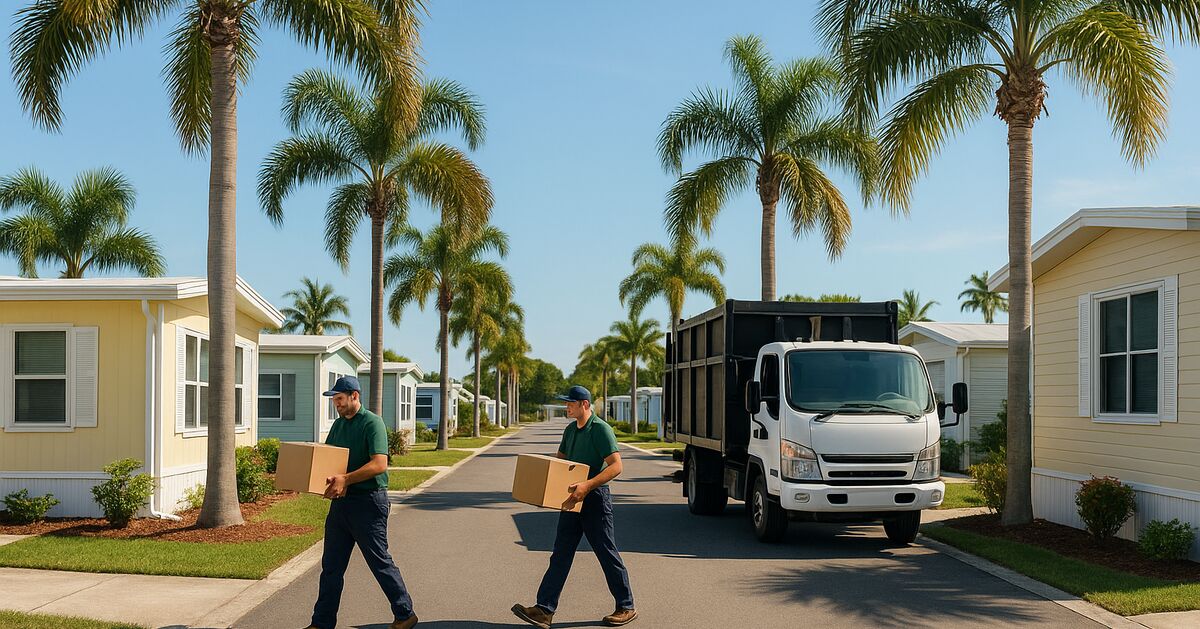
Scheduling a cleanout for a manufactured or mobile home in Venice sounds straightforward until the park manager knocks on your window and tells you the truck has to leave. It happens more than people expect, and it comes down to a set of rules that simply do not exist for stick-built homes on private lots.
This post is aimed squarely at families, landlords, and personal representatives who are dealing with a manufactured home or mobile home in one of Venice's many retirement and seasonal communities. The rules here are specific, the stakes are real, and ignoring them can cost you fines, delay the cleanout for weeks, or put the entire lot lease at risk.
Why manufactured homes are a different legal animal
The first thing to understand is that a manufactured home is, under Florida law, treated more like a vehicle than like real property, at least until it is permanently affixed and the title is retired. Florida Statute Chapter 723 governs mobile home park tenancies, and it creates a parallel universe of rights and obligations that has no equivalent for someone living in a conventional house in Venice or Nokomis.
When you own a stick-built home, you own the land underneath it. When you own a manufactured home in a land-lease community, you own the structure but you are renting the lot. That distinction ripples through everything: who can enter the property, what the park can demand during a cleanout, and what happens to the home if it is being sold, donated, or demolished.
The Florida Department of Highway Safety and Motor Vehicles (DHSMV) is generally understood to maintain titling records for manufactured homes that have not had their titles retired, and this should be confirmed with the DHSMV or a title company. Before a home can be disposed of, sold, or in some cases even cleaned out and left vacant, the title situation has to be resolved. That is a legal step, not a junk-hauling step, and it matters enormously for estate situations.
The lot-lease rules that surprise families most
Venice has a significant number of age-restricted communities, many of them built in the 1960s through the 1980s, spread across the south end of Sarasota County and into the North Port corridor. Communities like Capri Isles, Venice Gardens, and various 55-plus parks along U.S. 41 and Jacaranda Boulevard operate under recorded prospectuses and rules that go well beyond what an HOA in a stick-built neighborhood would enforce.
Here are the rules that catch families off guard during a cleanout:
- Park approval for contractors. Many Venice-area mobile home parks require that any outside contractor, including a junk hauler, be approved by management before setting foot on the property. This is not a courtesy request. It is often written into the lot lease, and violating it can result in a lease termination notice, which is the last thing you want if you are still trying to sell or transfer the home.
- Insurance certificates. Parks routinely require proof of general liability insurance from any hauling company working on the lot. A hauler who cannot produce a current certificate of insurance will be turned away at the gate in gated communities, or will be asked to leave mid-job in open communities.
- Vehicle weight restrictions on interior roads. Mobile home park roads may not be built to the same load specifications as public streets, so it's worth checking with park management before scheduling a heavy delivery vehicle. A heavy box truck or roll-off dumpster delivery vehicle can crack or buckle asphalt that was engineered for passenger cars. Parks know this and many have posted or written weight limits. A standard roll-off container delivery truck can easily exceed those limits, which means the dumpster-in-the-driveway approach that works perfectly in a Venice residential neighborhood may not be an option here.
- No overnight containers. Even in parks where a roll-off can be delivered, overnight placement is frequently prohibited. The container must be filled and picked up the same day, which changes the logistics of the entire job.
- Lot restoration requirements. After a cleanout, some parks require the lot to be left in a specific condition, including removal of skirting, slab cleaning, or landscaping cleanup, before they will release the lot or allow a sale to proceed.
What happens when the home is part of an estate
This is where things get genuinely complicated. If the person who lived in the manufactured home has passed away, you are dealing with at minimum two overlapping legal situations: the estate or probate process, and the lot lease.
The lot lease does not transfer automatically. Florida Statute 723.061 outlines the grounds on which a park can terminate a tenancy, and an abandoned or deceased-owner situation is one of them. The park has its own timeline and its own interests. Families who delay the cleanout because they are sorting out probate can find themselves facing lot rent arrears, notices, and pressure from park management that a conventional estate would never encounter.
Our earlier post on cleanout timing after a Sarasota probate filing covers the general legal framework for what you can and cannot remove before probate closes. In a manufactured home setting, the same caution applies, with the added wrinkle that the park may have its own deadlines running parallel to the court's schedule.
A personal representative handling a Venice estate that includes a manufactured home should talk to a Florida probate attorney and contact the park management early, not after the cleanout is already scheduled. Understanding the park's specific requirements for vacating a lot can prevent a situation where the hauler arrives and cannot work.
For context on how estate law shapes what a hauling crew can and cannot touch, see our related post on what Sarasota junk haulers can and cannot touch when there's an active estate attorney involved.
Physical differences that change how a cleanout works
Beyond the legal and administrative layer, manufactured homes present physical constraints that genuinely affect how a cleanout crew operates.
Narrow doorways and hallways. Older mobile homes, particularly those built before federal manufactured housing standards were introduced in the mid-1970s, tend to have tighter dimensions. Doorways are often 28 to 30 inches wide. Large furniture, appliances, and bulky items require more maneuvering, more time, and sometimes partial disassembly before they can exit the home without damaging door frames or walls.
Flooring integrity. Subflooring in older manufactured homes can be compromised by humidity, past roof leaks, or age. Soft spots in the floor are a genuine safety issue for crew members carrying heavy loads. A responsible crew will identify these areas early and plan around them rather than push through and risk injury or further structural damage.
Skirting removal and replacement. If a bulky item, such as an old chest freezer or a large appliance, is stored in the crawl space under the home behind the skirting, the skirting has to come off to retrieve it. Some parks require that removed skirting be replaced or that a specific replacement type be used. This is an added step that does not come up in stick-built homes with poured-slab or raised-foundation storage areas.
Propane and older utility systems. Many manufactured homes in Venice's older communities use propane for cooking and heating. Disconnection of appliances tied to a propane system needs to be handled carefully. Per the guidelines from the National Fire Protection Association (NFPA 58, which covers liquefied petroleum gas code), propane lines should be properly capped and the system depressurized before appliances are moved or removed. This is not a step to skip to save time.
Ceiling and wall panel construction. The walls and ceilings in manufactured homes are often paneled rather than drywalled. They can be fragile, and a crew that is used to working in stick-built homes may not realize how easily panels crack or delaminate when furniture is banged against them during removal. Damage to interior panels before a home is sold or transferred creates a negotiating problem that a careful crew can easily avoid.
How park rules affect scheduling and pricing
All of the above adds up to a job that takes longer and requires more coordination than a comparable cleanout in a stick-built Venice home. Hauling crews who are familiar with manufactured home communities will price and schedule accordingly. Those who are not often underprice the job and then either rush through it or ask for more money mid-project.
Specific factors that legitimately affect the cost of a manufactured home park cleanout:
- Time spent communicating with park management to obtain approval and understand lot-specific rules
- Whether a roll-off container is permitted, or whether all material must leave in a box truck the same day
- Access constraints, including gated entry requirements, narrow park roads, or low-clearance overhangs near the home
- Physical complexity of the home itself, including flooring condition, narrow doorways, and skirting
- Lot restoration requirements after the home is cleared
Because these variables differ significantly from park to park and home to home, a responsible hauler will want to see the property before quoting a firm price. Our team covers Venice junk removal and estate cleanout services, and we are familiar with the communities and lot-lease dynamics in this part of Sarasota County.
The title issue when the home is going to be demolished or sold
If the manufactured home is being cleared out because it will be sold, the title situation is straightforward in theory and messy in practice. The DHSMV title must be properly transferred. If the home is going to be demolished or removed from the lot, the title may need to be surrendered, and the park will often have documentation requirements of its own before it releases the lot for use by a new tenant or a new home.
Families who are managing this process from out of state, which is common given how many Venice manufactured home residents are originally from the Midwest or Northeast, can find this logistically exhausting. The park's office hours, the DHSMV paperwork, and the hauler's schedule all have to align. The cleanout itself is often the most manageable piece of the puzzle, but only if it is booked with a crew that understands the access and approval requirements.
If you are dealing with a snowbird-style estate situation where the resident spent winters in Venice and passed away, the process shares some features with what we covered in our post on Englewood snowbird property cleanout when a seasonal resident passes away up north. The logistical challenges of managing a property from a distance, while park management is applying its own pressure on its own schedule, are very real.
What to do before you book anyone
If you are responsible for a manufactured home cleanout in Venice or the surrounding area, including communities closer to North Port or Osprey, here is a practical sequence before you call a hauler:
- Contact the park office first. Get the specific rules in writing if you can. Ask about contractor approval, insurance requirements, container policies, and lot restoration standards.
- Confirm the title situation. If the home is part of an estate, a Florida probate attorney or title company can confirm whether the title is in order and whether any liens (including lot rent arrears) need to be resolved before the property can be transferred or cleared.
- Walk the home with the hauler before booking. A reputable crew will want to see the flooring condition, doorway widths, access routes, and any propane or utility connections before giving you a firm quote. Be wary of anyone who quotes over the phone without asking any questions about the property.
- Confirm the hauler carries general liability insurance and can document it. This is a park requirement in many communities, and it also protects you as the property owner or personal representative.
- Build in extra time. Manufactured home park cleanouts often take longer than equivalent jobs in stick-built homes. Factor in the approval process, the access constraints, and the physical complexity of the structure.
Our full list of services covers estate cleanouts, hoarder house cleanouts, and general junk hauling, all done by a crew that is experienced with the specific realities of Sarasota County properties. And if you have questions that fall outside the typical scope of a hauling job, our FAQ page covers many of the situations that come up with estates, mobile home parks, and complex cleanouts.
Venice is not a one-size-fits-all market
The manufactured home communities scattered across Venice, from those near the Intracoastal to the ones tucked along Center Road and Pinebrook Road, are each a little different. Some are well-run with responsive management offices. Others have absentee ownership and inconsistent enforcement of their own rules. The only reliable approach is to ask directly, get answers in writing, and work with a hauler who knows enough to ask the right questions before the truck shows up.
If you are ready to talk through a specific situation, reach out to us directly. We can help you think through the park approval process, assess the home, and put together a plan that does not leave you explaining to the park manager why the container is still sitting in the lot on day three.
For more resources on estate cleanouts, manufactured home situations, and what to expect from a professional hauling crew in this area, browse the rest of our blog or check out our service area pages to confirm we cover your specific community.
Sources & further reading
- Florida Statute Chapter 723 - Mobile Home Park Tenancies (Florida Legislature)
- NFPA 58: Liquefied Petroleum Gas Code (National Fire Protection Association)
- Florida Statute 723.061 - Eviction; grounds, proceedings (Florida Legislature)
Claim-by-claim audit (4 checked)
- “The Florida Department of Highway Safety and Motor Vehicles (DHSMV) is generally understood to maintain titling records for manufactured homes that have not had their titles retire…” (rewritten to what the article can stand behind)
- “Older mobile homes, particularly those built before federal manufactured housing standards were introduced in the mid-1970s, tend to have tighter dimensions.” (rewritten to what the article can stand behind)
- “Mobile home park roads may not be built to the same load specifications as public streets, so it's worth checking with park management before scheduling a heavy delivery vehicle.” (rewritten to what the article can stand behind)
- “Florida Statute 723.061 outlines the grounds on which a park can terminate a tenancy, and an abandoned or deceased-owner situation is one of them.” (reasoning shown in the article)