
How to document a hoarder house cleanout for insurance or
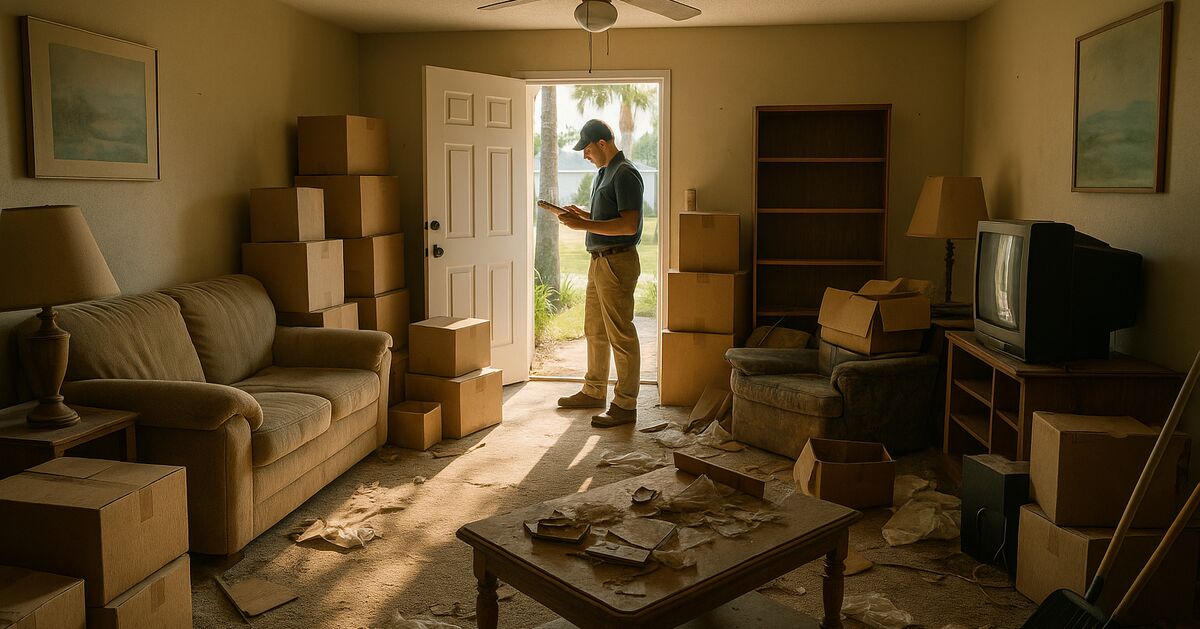
Skipping the documentation step is the mistake people regret most after a hoarder house cleanout, and by then there is no going back. Whether you are managing an estate, acting as a court-appointed guardian, settling an insurance claim after storm damage, or handling a landlord-tenant dispute in North Port or Englewood, a thorough paper trail is the difference between a smooth resolution and months of headache. This guide walks through every layer of documentation, why each one matters, and how to build the record before, during, and after the cleanout.
Why documentation matters more in hoarder cleanouts than in ordinary junk removal
A standard one-room junk removal job carries little legal weight. A full hoarder house cleanout is different. The volume of contents, the condition of the property, and the relationships involved (heirs, tenants, insurers, attorneys, adult protective services) all create situations where someone may later question what was inside, what was removed, and what was left behind.
Hoarding conditions can become relevant in competency determinations, guardianship proceedings, and landlord-tenant disputes, so documentation of the property's condition matters. Insurance adjusters reviewing claims for mold, structural damage, or pest infestation want to see the pre-cleanout state of the property so they can assess cause and extent. Sarasota County Code Enforcement may require evidence that a cited property has been brought into compliance. In all of these scenarios, your documentation is your evidence.
The good news: creating a solid record does not require expensive equipment or professional investigators. It requires a plan, consistency, and a few hours of disciplined effort before anyone starts carrying things out the door.
Step 1: Secure legal authority before you touch anything
Documentation of who has the right to authorize the cleanout belongs at the very top of your file. Without it, every photograph and inventory list you create exists in a legal vacuum.
Depending on the situation, the authorizing document might be:
- A death certificate combined with letters testamentary or letters of administration from a Florida probate court
- A durable power of attorney that explicitly covers real property decisions
- A guardianship order issued by a Sarasota or Charlotte County circuit court
- A landlord-issued notice to vacate combined with a writ of possession if a tenant has been lawfully evicted
- A written authorization from the homeowner themselves, signed and dated, if they are present and competent
Make a photocopy or scan of this document before anything else happens. It goes in the front of your documentation folder. Our post on cleanout timing after a Sarasota probate filing covers the probate side of this in detail if you need it.
Step 2: Video walkthrough before a single item moves
The single most powerful piece of evidence you can create is an unedited video walkthrough of the entire property, recorded before the cleanout begins. Here is how to do it right:
Record continuously. Start outside the front door, state the date, address, and your name aloud, then walk every room without stopping the recording. Continuous footage is far harder to challenge than a series of photographs, because there are no gaps someone can question.
Use good light. Open every blind and curtain. Supplement with a flashlight or a phone light in closets, under stairwells, and in garages. Dark, unclear footage helps no one.
Narrate as you go. Point out specific conditions: standing water, mold on walls, structural damage, pest evidence, blocked exits, collapsed ceilings, the height of debris piles. Narration makes the footage useful to someone who was not there.
Record the exterior too. The condition of the roof, the yard, the fence, and any outbuildings matters to both insurers and code enforcement.
Back the footage up immediately. Upload to cloud storage (Google Drive, iCloud, Dropbox) the same day. Email yourself the link. Do not rely solely on a single phone that can be lost or damaged.
If you are managing a cleanout in a condo on Siesta Key or Longboat Key, record any common areas that were affected as well. HOA boards and property managers frequently want this evidence.
Step 3: Still photography for detailed documentation
Video captures the whole; photographs capture the details. You need both.
Work room by room, and follow a system. Photograph:
- Each room from all four corners, showing the full scope of accumulation
- Any structural damage visible: water stains, buckled floors, holes in walls or ceilings, rotted wood
- Evidence of pests: droppings, nesting material, dead insects, damaged packaging
- Hazardous materials in place before removal: aerosol cans, paint containers, propane tanks, pool chemicals (common in Sarasota County homes with pools)
- Any items of apparent value that are still in the home, so their presence and condition are on record
- Safety hazards such as blocked egress windows, overloaded electrical outlets, or compromised staircases
Name your photo files by room and sequence (kitchen-01, kitchen-02, bedroom1-01, etc.) rather than leaving them as camera-assigned numbers. When you are handing 400 photos to an attorney six months later, organized files save everyone time.
A practical tip: photograph any item that a family member might later claim was in better condition than it was, or claim was removed without authorization. This is especially relevant in estate cleanouts where heirs disagree about what should have been kept.
Step 4: Create a written inventory of notable contents
A video and photos show condition. A written inventory shows what was there. These serve different purposes and you need both.
The inventory does not need to be exhaustive for ordinary junk, but it should document:
- Items of apparent financial value (furniture, electronics, jewelry, collectibles, tools, sports or outdoor equipment)
- Important documents found (financial records, deeds, vehicle titles, insurance policies, medical records)
- Prescription medications and quantities
- Firearms or weapons of any kind
- Items that were set aside for specific heirs or beneficiaries rather than hauled away
- Items that were donated rather than disposed of, including the receiving organization and date
For each category, note the general quantity and condition. "Approximately 15 banker boxes of financial documents, dates ranging from 1980s to 2019, set aside for attorney review" is far more useful to a probate court than "a bunch of papers."
If you are working with a professional hauler (like the full-service cleanout team at Sarasota Junk Hauling), ask whether they can note in their own records what categories of material were removed. A reputable hauler will have some record of the load, which can support your own documentation.
Step 5: Note hazardous conditions for insurance purposes
Florida homeowners' insurance policies may contain exclusions or coverage triggers related to the condition of the property, so check your policy and confirm with your insurer. Mold, pest infestation, long-term moisture intrusion, and structural neglect are all areas where documentation of the pre-cleanout condition matters to a claim.
Per the EPA's guidance on mold and moisture in buildings, visible mold growth on surfaces should be photographed and its approximate extent estimated (a 2-by-4-foot patch on the bathroom wall, for example). Do not disturb suspected mold before photographing it. If mold remediation will be part of the project, the insurance adjuster may want to inspect before removal begins, so check with the insurer first.
Similarly, if the accumulation contributed to structural damage (common when debris has been piled against walls or moisture has been trapped beneath belongings for years), document the structural issue separately from the junk. Floors with water damage visible under removed piles, wall studs with visible rot, ceiling joists stained from a blocked roof vent: all of these are insurance-relevant conditions that disappear once the cleanout is complete.
Pest issues are worth a separate note. Florida's warm, humid climate makes termite and rodent activity a realistic concern in homes where food waste and clutter have accumulated over years. The Florida Department of Agriculture and Consumer Services oversees pest control licensing in the state; if a licensed inspector documents infestation before the cleanout, that report becomes part of your file.
Step 6: Document the removal process itself
The cleanout day is not just about hauling. It is another documentation opportunity.
Keep a simple log with:
- Start time and end time for each day of work
- Names of everyone present (haulers, family members, attorneys, social workers, code enforcement officers if applicable)
- What areas were cleared each day
- Any items removed for donation, including the name of the receiving charity and ideally a receipt
- Any items left behind and why (items claimed by a specific heir, items requiring specialty disposal, items under a hold requested by an attorney)
- Any unexpected discoveries: hidden cash, additional hazardous materials, structural surprises
If code enforcement from the City of Sarasota, North Port, or Venice is involved because of a cited property, ask the officer whether they need to inspect at specific stages. Having that inspection noted in your log, with the officer's name and badge number, closes the loop on the compliance record.
Step 7: Post-cleanout documentation
Once the property is clear, do one more complete video walkthrough and another round of room-by-room photographs. This "after" record serves several purposes:
- It proves compliance if a municipal citation is involved
- It gives an insurer the confirmed post-remediation state of the property
- It protects you if any claim arises later that items were taken that should not have been
For properties in Sarasota, Venice, or anywhere else in the county, if a code enforcement case was opened, you may need to formally notify the city or county that the violation has been corrected. Your after photos and your hauler's removal records together support that notification.
Ask your hauler for a final invoice that itemizes the job in reasonable detail: dates of service, address, general description of materials removed, and method of disposal or donation. A professional hauler should provide this without hesitation. It is a legitimate business record, and it belongs in your documentation folder alongside everything else.
Organizing and storing the complete record
Pull everything into a single folder, physical or digital or both:
- Legal authorization document
- Pre-cleanout video (with cloud backup link noted)
- Pre-cleanout photographs, organized by room
- Written inventory of notable contents
- Any specialist reports (mold inspector, pest inspector, structural engineer)
- Daily removal log
- Donation receipts
- Post-cleanout video and photographs
- Hauler invoices and removal records
- Any communications with insurance adjuster, attorney, or code enforcement
If the matter is connected to an active estate or guardianship, give a copy of the complete folder to the attorney of record. If it is an insurance claim, submit a copy with your claim packet and keep the original. If it is a landlord-tenant matter, store it somewhere you can access it quickly if litigation arises.
A word about working with a professional hauler on documentation
A good junk removal company understands that hoarder cleanouts carry legal weight. When you reach out to schedule a cleanout, ask directly: will you provide a dated, addressed invoice? Can you note in your records what categories of material were removed? Will your crew pause on any room if I need to do a walkthrough before you touch it?
Answers to those questions tell you quickly whether the company has experience with estate and hoarder situations or whether they just haul ordinary junk. Our full breakdown of services explains how we approach these jobs differently from a standard pickup, and our FAQ page covers common questions about what can be removed, what requires special handling, and how we work with attorneys and family members.
If you are in Nokomis, Osprey, Englewood, or anywhere else across our full service area, the same documentation principles apply regardless of which municipality is involved. The legal and insurance landscape is consistent across Sarasota and Charlotte counties for these purposes.
The bottom line
A hoarder house cleanout is one of the most emotionally and logistically demanding jobs a family or property manager can face. Adding a documentation layer to an already difficult project feels like extra work in the moment. It is. But every piece of documentation you create before the truck rolls away is a problem you will never have to solve later. Start the video before the first bag moves. Everything else follows from there.
Sources & further reading
- Mold and Moisture in Buildings: EPA Guidance (U.S. Environmental Protection Agency)
- Florida Department of Agriculture and Consumer Services: Pest Control Licensing (Florida Department of Agriculture and Consumer Services)
- Florida Probate Code, Chapter 733: Administration of Estates (Florida Legislature)
- Florida Guardianship Law, Chapter 744 (Florida Legislature)
Claim-by-claim audit (5 checked)
- “Hoarding conditions can become relevant in competency determinations, guardianship proceedings, and landlord-tenant disputes, so documentation of the property's condition matters.” (rewritten to what the article can stand behind)
- “Florida homeowners' insurance policies may contain exclusions or coverage triggers related to the condition of the property, so check your policy and confirm with your insurer.” (rewritten to what the article can stand behind)
- “Florida's warm, humid climate makes termite and rodent activity a realistic concern in homes where food waste and clutter have accumulated over years.” (reasoning shown in the article)
- “The Florida Department of Agriculture and Consumer Services oversees pest control licensing in the state; if a licensed inspector documents infestation before the cleanout, that re…” (cited → fdacs.gov)
- “Per the EPA's guidance on mold and moisture in buildings, visible mold growth on surfaces should be photographed and its approximate extent estimated (a 2-by-4-foot patch on the ba…” (cited → epa.gov)