
Estate cleanout vs. estate sale vs. donation: which option
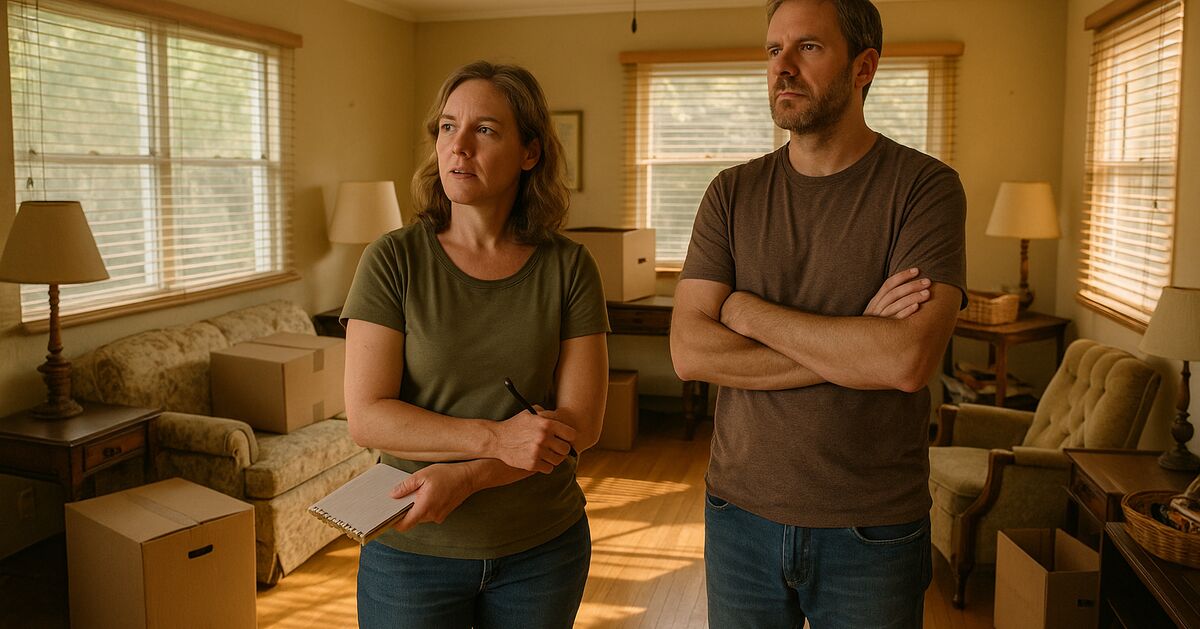
Most families staring at a full house of belongings don't need someone to tell them it's overwhelming. They already know. What they need is a clear way to think through the options so they can stop second-guessing and start making decisions.
If you're dealing with a property in Sarasota, Venice, North Port, Englewood, or anywhere else along the Suncoast, you've probably heard three phrases thrown around: estate cleanout, estate sale, and donation. People sometimes use them interchangeably, and they shouldn't. Each one means something specific, solves a specific problem, and comes with its own timeline, cost, and emotional weight.
This post breaks down all three, honestly, so you can figure out what actually fits your situation.
What each option actually means
Before comparing them, it helps to define them plainly.
Estate cleanout means hiring a crew to physically remove everything from a home, or the items that remain after other steps are done. The goal is an empty, broom-clean house, ready for sale, rental, or handover. A cleanout crew loads furniture, appliances, boxes, trash, and debris into a truck and hauls it away. Some items get donated or recycled. The rest go to the landfill. You don't have to sort much. You just have to decide what you're keeping personally, and let the crew handle the rest.
Estate sale means turning the home itself into a temporary store. An estate sale company comes in, prices every item, advertises the event, and runs the sale over one to three days. Shoppers walk through the house and buy things. The estate sale company takes a commission, typically somewhere in the range of 30 to 50 percent of gross sales. What doesn't sell usually stays behind unless you've negotiated otherwise.
Donation means arranging for charities, thrift stores, or nonprofits to take usable items. In Sarasota County, organizations like Habitat for Humanity ReStore, local hospice thrift shops, and various church-run programs accept furniture, housewares, and clothing. Some offer free pickup for larger loads. Donation doesn't generate cash, but it can feel meaningful and it keeps items out of the landfill.
None of these three is universally the best choice. The right answer depends on the contents of the home, the timeline you're working with, and what matters most to your family.
When an estate sale makes sense
An estate sale earns money from items that have real resale value. If the home contains antiques, quality furniture, collectibles, jewelry, tools, artwork, or specialty kitchen equipment, an estate sale can generate meaningful cash. That's the case for it.
The case against it comes down to time, condition, and contents.
Estate sale companies in the Sarasota area are often booked out several weeks, sometimes longer during busy season. If the property needs to close quickly, that timeline may not work. The company also needs enough sellable merchandise to justify the effort. A home with mostly worn furniture, basic housewares, and decade-old electronics may not attract enough buyers to cover the commission.
Condition matters too. Estate sale shoppers in Venice or Siesta Key are browsing for value. Items that are stained, broken, or clearly at end of life won't move. And after the sale, you're still left with everything that didn't sell, which means you need a follow-up plan anyway.
One more thing worth saying plainly: estate sales require the family to leave the home open to strangers for multiple days. Some families find this uncomfortable, especially when the property belonged to a parent or grandparent. That's a real consideration, not a small one.
Estate sales tend to work best when:
- The home contains antiques, collectibles, or high-quality furniture
- You have four to six weeks or more before you need the property cleared
- The family is emotionally ready to watch strangers walk through and buy belongings
- There's enough volume and quality to attract strong buyer traffic
When donation is the right move
Donation is not a fallback. It's a legitimate first choice for many families, especially when the contents are in good condition but not particularly valuable, or when the family's priority is keeping things out of the landfill rather than generating revenue.
Several Sarasota County organizations do free furniture pickups, which makes donation surprisingly convenient. Habitat for Humanity ReStore accepts appliances, cabinetry, building materials, and furniture in good shape. Hospice and church thrift stores often take clothing, kitchenware, books, and small furniture. Some organizations serve families in financial hardship directly, which adds a layer of meaning for donors.
The catch is that donation requires items to be in genuinely usable condition. Charities are not equipped to be trash haulers. A worn-out mattress, a broken recliner, or bags of outdated medications don't belong in a donation load. Trying to donate items that charities won't accept wastes everyone's time and can actually create more work if the charity refuses the pickup.
Another practical reality: most donation organizations have capacity limits. They may not be able to take an entire house in one trip, and scheduling multiple pickups across multiple organizations takes coordination. If your timeline is tight, donation alone rarely clears a property fast enough.
Donation tends to work best when:
- Contents are in solid, usable condition but not highly valuable
- You have a flexible timeline and can coordinate multiple pickups
- Environmental considerations or giving back to the community are priorities
- You're pairing it with another option to handle what charities won't take
When a professional estate cleanout makes sense
A professional estate cleanout is not the last resort after other things fail. For many Sarasota families, it's the smartest first call, or at least an important part of the plan from the beginning.
Here's why. An estate cleanout solves the core logistical problem: getting everything out of the home efficiently so the property can move forward. It works regardless of what's inside, how much of it there is, or what condition it's in. Worn furniture, old appliances, outdated electronics, boxes of paperwork, mattresses, yard equipment, and years of accumulated belongings all go. You don't have to sort through every drawer or figure out who wants the old patio set.
This matters most in a few situations. If the estate is going through probate and the executor needs the property cleared by a deadline, a cleanout crew can often complete the job in one or two days. If the home has been sitting for months and everything inside is dusty, musty, or past its prime, an estate sale isn't realistic and donation is limited. If the family lives out of town (which is common for Sarasota estates, given how many retirees move here without their adult children nearby), having a single local crew handle everything is far simpler than coordinating multiple vendors remotely.
Families in Englewood, Nokomis, and North Port often find this especially relevant when dealing with a parent's home that was used as a seasonal property. These homes can hold a lot, and family members flying in from out of state need things resolved quickly.
It's also worth noting that a good cleanout company will separate out items for donation or recycling rather than dumping everything. So choosing a cleanout doesn't mean choosing the landfill. It means choosing efficiency, with someone else doing the sorting.
A professional estate cleanout tends to work best when:
- The timeline is tight (probate deadlines, sale closing, rental prep)
- Contents are mixed quality, some good, some not
- The family lives out of town or can't be present for extended periods
- The home has a lot of volume and the family doesn't have the bandwidth to manage multiple vendors
- You want one point of contact and a clear completion date
Why the best plan is usually a combination
In practice, these three options layer together well. A common sequence for Sarasota families looks something like this:
- The family walks through the home and removes anything with personal or sentimental value.
- An estate sale company is called in if there's enough quality merchandise to justify it, or high-value items are sold individually through an auction house or consignment shop.
- A donation pickup is scheduled for remaining items in good condition.
- A junk hauling and estate cleanout crew handles everything that's left, including items charities won't take, oversized pieces, and anything in poor condition.
This approach maximizes the return on sellable items, keeps usable goods out of the waste stream, and still gets the property cleared completely on a workable timeline.
The key is sequencing correctly. Don't call a donation organization after an estate sale has already removed the best items, leaving only things charities can't use. Don't schedule a cleanout crew before the family has walked through and pulled keepsakes. Think through the layers in advance, even if roughly.
If you're not sure where to start, our FAQ page covers common questions about what cleanout crews take, how scheduling works, and what to expect on the day of service.
The emotional dimension that nobody talks about enough
Clearing an estate is not just a logistics project. It's grief work. The decisions feel heavier than they should because they feel final, like letting go of a person rather than just their stuff.
A few things that help families in this position:
Give yourself one walk-through before any crew arrives. Even if you think you don't want anything, walk through slowly. You may find a photo album, a piece of jewelry, a book with a handwritten inscription that you'll be glad you took. Once a cleanout crew loads the truck, it's gone.
Don't guilt yourself into keeping things you won't actually use. It's common to feel obligated to take furniture or housewares out of respect for the person who owned them. But if you have no room for it and won't use it, keeping it doesn't honor them. Letting it go to someone who needs it actually does.
Let someone else do the heavy work. Physical labor during grief is exhausting in a different way than regular exhaustion. There is no award for hauling furniture yourself through a Florida summer when you're already emotionally depleted. That's what estate cleanout services exist for.
For more on the emotional and practical side of clearing a loved one's home, we've written specifically about how to clean out a loved one's home after a death in Sarasota County, which covers the sequencing and emotional pacing in more depth.
A quick reference for Sarasota families
| Situation | Best starting option | |---|---| | Valuable antiques, quality furniture, flexible timeline | Estate sale first, then cleanout | | Good condition items, no time for a sale | Donation plus cleanout | | Tight deadline, mixed contents, out-of-town family | Cleanout as primary approach | | Large volume, poor condition, post-hurricane damage | Cleanout only | | High-value items mixed with junk | Estate sale or consignment for select items, cleanout for the rest |
How to get started in the Sarasota area
If you're managing an estate in Sarasota, Venice, Osprey, Longboat Key, or anywhere nearby, the first step is usually a quick phone call or message to get a sense of what you're working with. A reputable cleanout company will ask about the size of the home, the volume of contents, and your timeline before giving you any kind of estimate.
You don't have to have everything figured out before you reach out. Most families don't. The goal of that first conversation is just to understand your options and start building a plan.
If you're ready to talk through what makes sense for your situation, get in touch with our team and we'll give you a straightforward assessment with no pressure.
Clearing an estate is hard. The process doesn't have to be.