
Junk removal after a Sarasota flood or storm: what to save
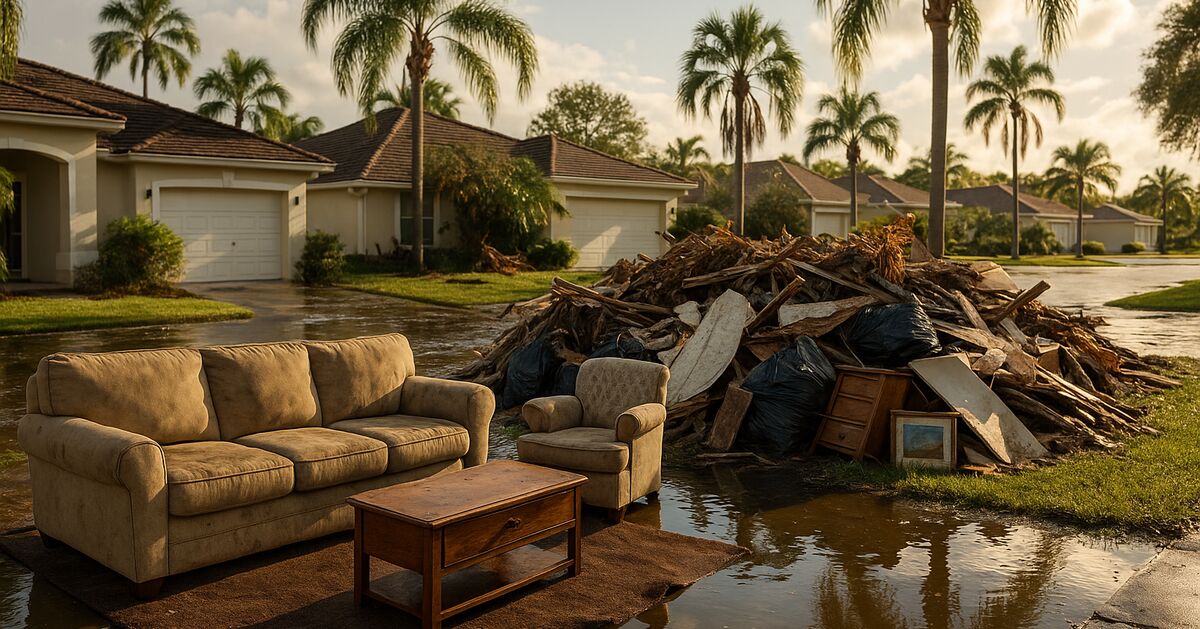
The storm has passed, the water has receded, and now you're standing in your home surrounded by waterlogged furniture, ruined drywall, and piles of debris you don't know what to do with. That moment is overwhelming, and it's also one where the wrong decisions cost real money and real health.
This guide is written for homeowners across Sarasota, Venice, North Port, Englewood, Osprey, Nokomis, Siesta Key, and Longboat Key who are staring down storm aftermath and need practical, honest advice about what to keep, what to throw out, and how to get it all gone as quickly as possible.
Why storm debris is different from ordinary junk
Normal junk removal is relatively straightforward. You pile things up, a crew hauls them away, and life moves on. Storm debris is a different animal entirely. Floodwater carries bacteria, sewage, mold spores, chemicals from neighborhood runoff, and pesticides. Items that look solid and dry on the surface can be saturated with contaminated water just below that surface. Even belongings that feel sentimental and "fine" may be quietly breeding mold that will spread to the rest of your home within 24 to 72 hours.
That urgency is real. FEMA and public health authorities consistently note that mold colonization begins within 24 to 48 hours of water intrusion. In Southwest Florida's heat and humidity, that window is even shorter. The sooner you make decisions and get debris out of your home, the better your odds of stopping secondary damage.
This is not meant to frighten you. It is meant to help you move with purpose rather than paralysis.
Your first hour: safety before sorting
Before you touch a single piece of furniture or debris, do these things:
- Turn off electricity at the breaker if any water reached electrical outlets, walls, or the panel itself. Do not assume power is safe just because the lights came on.
- Wear protective gear. At minimum: rubber gloves, waterproof boots, and an N95 or better respirator mask. Eye protection helps too. Floodwater is not clean water.
- Document everything with photos and video before moving anything. Walk through every room. Your insurance claim depends on this record. Photograph each damaged item in place before it leaves the house.
- Open windows and doors to start airflow the moment it is structurally safe to do so. Cross-ventilation slows mold growth while you work.
- Do not run the HVAC system if floodwater reached the air handler, ductwork, or interior vents. You risk spreading mold and contaminants throughout the house.
Only after those steps should you begin the sorting process.
What is actually salvageable after flood damage?
This is the question most homeowners ask first, and the honest answer depends on two things: what the item is made of, and how long it was submerged or wet.
Hard, non-porous items
Metal, glass, hard plastic, and ceramic can almost always be cleaned and saved. Think:
- Appliances with sealed exteriors (check the motor and internal components separately)
- Glass dishes, cookware, and decorative items
- Metal furniture frames, garden tools, and hardware
- Plastic bins, toys, and outdoor furniture
Clean these with a diluted bleach solution (roughly one cup of bleach per gallon of water), rinse well, and dry thoroughly in the sun if possible.
Solid wood furniture
Solid wood is borderline. If it was submerged for less than 24 hours and dried promptly, there is a real chance it can be saved with proper drying, sanding, and refinishing. If it sat in water for days, swelled significantly, or smells musty, the wood has likely absorbed contaminated water deep into its grain. Be honest with yourself about the cost of restoration versus replacement.
Documents and photos
Wet paper is fragile but often recoverable if you act fast. Rinse documents in clean water (counterintuitively, this removes contaminants), then freeze them in zip-lock bags if you cannot dry them immediately. Professional document restoration services exist and are worth researching for irreplaceable items.
Electronics
Water and electronics are a dangerous combination. Do not plug in or turn on any electronic device that was submerged until it has been evaluated by a technician. Some can be saved with professional drying and cleaning. Many cannot. The risk of a fire from a damaged device is real.
What must go: no exceptions
Some categories of items are simply not worth the health risk or the restoration cost. Getting them out of your home quickly is the most important thing you can do.
Upholstered furniture and mattresses
Sofas, armchairs, mattresses, box springs, and cushions are essentially sponges. They absorb floodwater, which carries bacteria and sewage, deep into their fill material. That contamination cannot be washed out. Even if the piece dries and looks fine, it is harboring pathogens and mold spores. This is one of the hardest calls homeowners face because it means losing items they love, but there is no safe way to keep waterlogged upholstered furniture.
Drywall and insulation
Drywall that absorbed floodwater must come out. It holds moisture for weeks and becomes a mold incubator behind your walls. The general rule used by remediation professionals is: if water rose above the floor, plan to cut drywall at least 12 to 18 inches above the high-water line. Insulation in the walls is the same story. It cannot be dried adequately and must be replaced.
Carpeting and carpet padding
Carpet padding is virtually impossible to dry and decontaminate after flooding. Carpeting itself can sometimes be cleaned if it was exposed to clean water for a very short time, but carpet that sat in floodwater should be removed. It is not worth the mold risk.
Particle board and laminate furniture
Unlike solid wood, particle board and MDF absorb water rapidly and begin to swell and delaminate almost immediately. They do not dry back to a usable state. Flat-pack furniture, inexpensive bookshelves, and laminate cabinets that were submerged should go.
Food and medications
Any food item that was touched by floodwater must be discarded, including canned goods with compromised seals, anything in cardboard, and refrigerator contents if the power was out. Medications that were submerged should be discarded and replaced; flood contamination can compromise their safety and effectiveness.
The local angle: what makes Sarasota flood cleanup unique
Homeowners in our part of Florida face conditions that amplify the urgency of post-storm cleanup in ways that people in drier climates simply do not.
Heat and humidity mean that the 24 to 48-hour mold window is more like 12 to 24 hours in a closed, un-air-conditioned house in the summer months. Getting debris out and airflow in is not optional.
Storm surge versus rainwater flooding matters a lot. Properties on or near the Gulf, including many in Siesta Key, Longboat Key, Englewood, and the barrier islands, may experience true storm surge, which carries saltwater and marine debris into homes. Salt accelerates corrosion on metal and is an additional contaminant on top of the usual bacteria and sewage concerns.
Septic systems are common in North Port, Osprey, Nokomis, and parts of Venice and Englewood. Flooding can overwhelm septic systems and push sewage back through floor drains or low-lying fixtures. If this happened in your home, treat every item that sat on the floor as if it was exposed to sewage, because it likely was.
HOA and municipal debris guidelines vary. Some communities in Sarasota County have specific guidelines about how and where to stage debris for pickup during declared disasters. Check with Sarasota County Solid Waste or your municipality before piling debris at the curb, especially for large quantities.
How to prioritize when everything feels equally urgent
When you're standing in a damaged home, decision fatigue hits fast. Here is a simple framework:
- Remove health hazards first. Anything wet, soft, or organic that cannot be decontaminated comes out before anything else. That means mattresses, upholstered furniture, soaked rugs, and drywall.
- Protect what can still be saved. Move salvageable hard goods to a dry area or outside in covered conditions so they are not re-wetted if it rains again.
- Stage debris thoughtfully. Keep debris organized by type if you can. Appliances should be separated from general debris. Electronics should be set aside for proper disposal. Hazardous materials like paint, cleaners, and pesticides that were damaged should never go in with general debris.
- Call for help sooner than you think you need to. Post-storm periods create heavy demand for haulers, contractors, and remediation crews. Waiting even a day or two can mean waiting a week for help.
Our full list of hauling and cleanout services includes storm debris removal, and our crews are experienced with the specific challenges that post-storm situations present in this part of Florida.
What a professional junk hauling crew does differently in a storm cleanup
A professional crew brings more than muscle. Here is what separates experienced haulers from a borrowed pickup truck:
- Proper equipment. Large trucks mean fewer trips and faster removal. When your goal is getting contaminated materials out of the house as quickly as possible, volume capacity matters.
- Knowledge of what can and cannot be mixed. Appliances, electronics, and hazardous materials need to go to different facilities. A trained crew sorts as they work.
- Insurance and licensing. After a storm, it matters that the people in your home are insured. Accidents happen in debris-filled environments.
- Speed. Crews who work together regularly move significantly faster than a homeowner and a few friends. Speed is not just convenience in a storm cleanup; it is damage prevention.
If you are trying to weigh the cost of hiring help, our pricing breakdown for Sarasota junk removal walks through what drives costs up or down so you can budget realistically.
FEMA, insurance, and documentation tips
Before anything leaves your property, confirm you have done the following:
- Filed your insurance claim or at least notified your insurer. Many policies require you to notify them before removing debris. Get that call or email on record.
- Photographed and inventoried every damaged item. A written list with estimated values, backed by photos, strengthens your claim significantly.
- Asked about FEMA Individual Assistance. After a federally declared disaster, FEMA may provide assistance for temporary housing, home repairs, and other needs. Check DisasterAssistance.gov for current declarations.
- Keep receipts for all cleanout and repair costs. Hauling fees, remediation, and repair costs are often reimbursable through insurance or FEMA assistance. A receipt from a licensed hauler is more useful than a note about the neighbor who helped you.
How to find help fast after a storm in Sarasota County
Here is the reality of post-storm demand: every homeowner in the affected area is trying to hire the same contractors at the same time. The haulers, roofers, and remediation crews who were available last week are booked solid by the time the storm clears.
A few things help:
- Call as early as possible, even before the storm has fully passed, if you know damage is coming.
- Be specific about what you have when you call. "A lot of stuff" is hard to schedule. "Two waterlogged sofas, a queen mattress, soaked carpeting in three rooms, and about 20 bags of debris" gives a hauler what they need to send the right crew and truck.
- Ask explicitly about storm debris experience. Not every junk removal company is set up to handle the volume, the hazardous sorting requirements, or the physical conditions of a storm cleanout.
We serve homeowners across Sarasota, Venice, North Port, Englewood, Osprey, Nokomis, Siesta Key, and Longboat Key, and we understand the specific challenges each of these communities faces when a major storm rolls through. If you need to talk through what you are dealing with or get on our schedule, the easiest way is through our contact page.
A note on pace and grief
This section does not get written in most cleanup guides, but it belongs here.
Losing belongings to a storm is genuinely hard. A sofa is not just a sofa when it is the one your kids grew up on. A rug is not just a rug when it came from a grandparent's house. The clinical advice to "remove all soft goods immediately" can feel brutal when you are standing in the reality of what those things meant.
Give yourself a moment. Take the photos. Then do what you need to do to protect your home and your health. The goal is not to dismiss what was lost. It is to make sure you still have a home to rebuild your life in.
Post-storm cleanup is one of the harder versions of what we do, and we approach it with that in mind. You can also browse our FAQ if you have specific questions about what we can take, how we handle hazardous items, or how quickly we can typically respond.
Summary: your storm cleanup checklist
- Prioritize safety before sorting (power off, protective gear, document everything)
- Remove all soft goods, carpet, and damaged drywall as quickly as possible
- Save hard, non-porous items after proper decontamination
- Separate appliances, electronics, and hazardous materials from general debris
- Document everything for insurance before it leaves the property
- Call for professional hauling help early, because demand spikes fast after a storm
- Check local debris staging guidelines before piling at the curb
Storms are part of life in Southwest Florida. Good preparation and fast, informed action in the aftermath make an enormous difference in how quickly and completely you recover.