
Paperwork during a Sarasota estate or hoarder cleanout
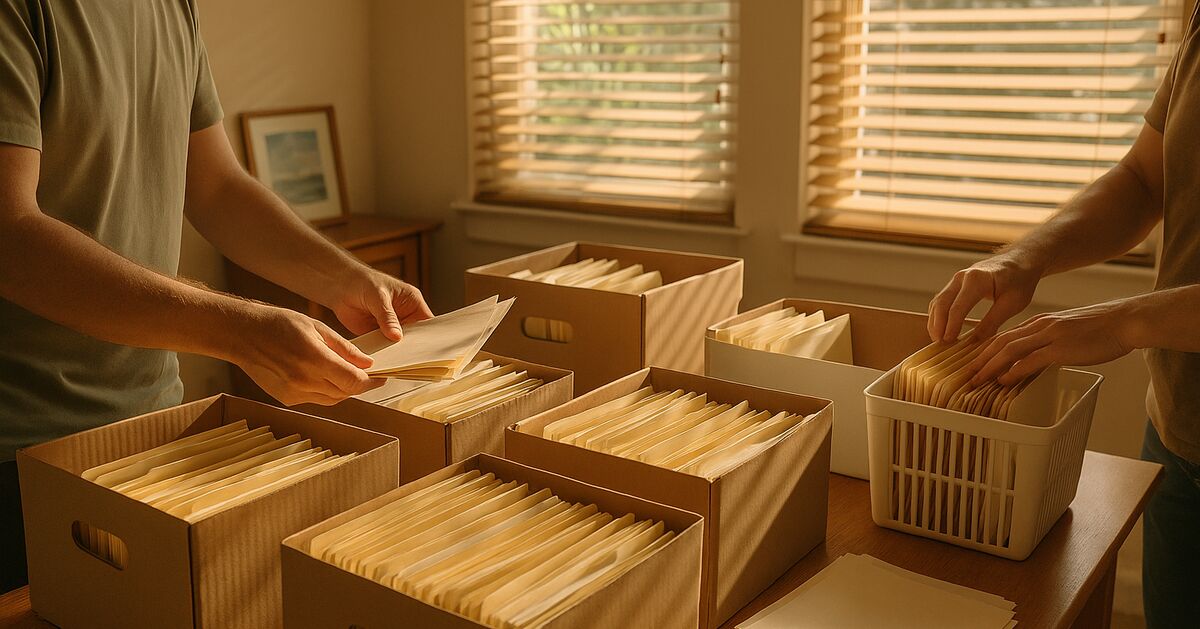
Paper is the silent hoarder inside almost every home. You can clear out a garage full of furniture in an afternoon, but open a filing cabinet that hasn't been touched since 1987 and you're suddenly frozen - every folder feels like it might contain something important.
That feeling is completely normal, and it's one of the biggest reasons estate cleanouts and hoarder house cleanouts stall. Families in Sarasota, Venice, North Port, and across the area tell us the same thing: we handled everything else, but the paper took three times as long as we expected.
This guide is here to change that. By the end, you'll know exactly which documents deserve a locked box, which ones need a shredder, and which ones you can toss without a second thought - along with a practical order of operations for working through a mountain of paperwork without losing your mind.
Why paper is different from other clutter
Tossing an old sofa is easy. Tossing a document that turns out to be a deed or a policy assignment is potentially a very expensive mistake. At the same time, keeping everything "just in case" is how people end up with 40 banker's boxes of utility bills from the 1990s.
Paper clutter also carries a risk that old furniture does not: identity theft. Social Security numbers, account numbers, medical record numbers, and insurance policy details don't expire just because the document is old. A thief who digs through a recycling bin or a dumpster can do real damage with papers from a decade ago.
So the goal here is not simply to get rid of paper fast. It's to sort with intention, protect what matters, destroy what could cause harm, and recycle the rest responsibly.
Before you open a single folder: gather your supplies
Working through a large paper archive goes much faster when you're not making repeated trips to find bags or labels. Before you start, put these in the room:
- Three clearly labeled boxes or bins: KEEP, SHRED, and RECYCLE
- A box of large contractor bags for bulk recycling
- A fine-tip marker and sticky notes for flagging individual pages within folders
- A portable shredder if the volume is small, or a plan for drop-off or pick-up shredding if it's large (more on that below)
- A legal-size accordion folder or binder for the documents you're keeping
Starting with the right setup keeps you moving instead of stopping to figure out what to do with each item.
Category 1: Keep permanently (or until the estate is fully settled)
Some documents have no expiration date. Others need to stay until a specific process - probate, property transfer, tax filing - is completely finished.
Keep permanently:
- Birth certificates, death certificates, marriage licenses, and divorce decrees
- Social Security cards
- Passports (even expired ones, which can be useful for genealogy or identity verification)
- Military discharge papers (DD-214 or equivalent); these are notoriously hard to replace
- Adoption records
- Naturalization or citizenship papers
- Original wills and trust documents (the original, signed version matters; copies are secondary)
- Property deeds and titles to vehicles, boats, or mobile homes
- Any deed of trust, mortgage satisfaction, or lien release
- Cemetery deeds or burial plot records (these come up more often in Florida estate cleanouts than people expect)
Keep until the estate is settled:
- The most recent three to seven years of federal and state tax returns (the IRS generally has three years to audit a standard return and up to seven years in specific situations; when in doubt, keep seven)
- Brokerage and retirement account statements from the past several years
- Life insurance policies and beneficiary designations
- Active annuity or pension documents
- Medical bills and insurance explanations of benefits from the past year or two, in case claims are still processing
- Business records if the deceased owned or co-owned a business
If you are unsure whether an estate is fully settled, a local probate attorney or CPA can give you a five-minute answer. That small investment of time is worth it before you shred anything in this category.
Category 2: Shred - do not simply toss
Anything with a name plus a sensitive number needs to be shredded, not recycled and not put in a trash bag. The combination of name and number is what creates identity theft risk. A piece of paper with just a name on it is generally fine to recycle. A piece of paper with a name and a Social Security number, account number, or medical record number is not.
Shred these:
- Old bank statements (beyond seven years, or once the estate is fully closed)
- Credit card statements and offers
- Brokerage or investment statements you've confirmed are superseded by more recent ones
- Medical bills, explanation-of-benefits letters, and anything from a healthcare provider with a patient ID or diagnosis code
- Pay stubs (keep only the final annual stub or W-2; the individual monthly stubs can go)
- Old tax returns beyond your retention window (again, seven years is a safe number)
- Receipts that include a full card number
- Anything from a Medicare or Medicaid summary with a claim number
- Old insurance policies that have been canceled and replaced
- Pension or retirement account statements older than your retention window
- Any document that includes a password, PIN, or account access code
A note on volume: A typical estate cleanout in Sarasota or Venice can turn up dozens of boxes of paper accumulated over 30 to 50 years. A home shredder will burn out on that volume. Mobile shredding companies will come to the house with an industrial shredder truck and destroy boxes of documents on-site in minutes. Some office supply stores also offer drop-off shredding by the pound. Either option is faster and safer than trying to do it yourself with a consumer shredder.
Category 3: Recycle without shredding
Once you've pulled out anything permanently valuable and anything sensitive, what's left can go into the recycling bin freely. This is usually the largest pile, and it moves fast.
Recycle without shredding:
- Utility bills older than one year (keep the most recent if the account is still active)
- Magazine and newspaper subscriptions
- Product manuals for items that are no longer in the home
- Warranty cards for expired or discarded items
- Junk mail and catalogs
- Old phone books and printed directories
- Church bulletins, newsletters, event programs
- Greeting cards (or donate to a craft organization if they're sentimental to no one)
- Recipes clipped from magazines unless someone in the family wants them
- Old homework, school papers, or work memos with no personal data
When in doubt about whether something has personal data: scan the document for a number longer than a phone number. If you see one and it's associated with a name, shred it. If there's no number, recycle it.
Working through a large paper archive efficiently
The biggest mistake people make is trying to read everything. You are not here to relive a life through its receipts. You are here to sort and move.
Here's the order of operations that works well in a real cleanout setting:
1. Do a first pass by folder or envelope, not by page. Look at the label, the return address, or the general contents of each folder. Most of the time you can place an entire folder into KEEP, SHRED, or RECYCLE without opening it.
2. Only open a folder when you can't tell from the outside. If the folder is labeled "Mortgage 1989 - 2017," you don't need to open it to know it contains mortgage statements. The question is simply whether you're still within the estate settlement window. If yes, keep. If not, shred.
3. Do not organize as you go. Sorting and organizing are two different jobs. Right now you're sorting. Put everything in its bin and organize the KEEP pile at the end.
4. Work in 90-minute blocks. Paper sorting is mentally exhausting in a way that hauling furniture isn't. Take breaks and come back fresh.
5. Get the shredding done promptly. Don't let a pile of sensitive documents sit in the garage for weeks. If you've filled several boxes for shredding, schedule the shredding service or make the drop-off run before the cleanout is finished.
What happens to the paper the haulers take away
When you work with a legitimate junk hauling service for an estate or hoarder cleanout, they are removing the physical objects in a home, not sorting documents. That's your job before they arrive, or at minimum, a task to do in parallel.
A good hauling crew will take bulk recycling, boxes of already-shredded paper, and general paper clutter that you've confirmed is safe to discard. They will not and should not be making decisions about which documents to keep. That responsibility stays with the family or executor.
If you're planning a full estate cleanout or hoarder house cleanout in the Sarasota area, it's worth thinking of the paper work as a separate, parallel track. While one family member works the paper, another can work with the crew on furniture, appliances, and general junk. The two processes don't have to stall each other.
Special situations that come up in Florida estate cleanouts
A few document situations come up regularly in Sarasota County and the surrounding communities that are worth flagging specifically.
Flood and hurricane records. Homes along the coast and in low-lying areas in North Port, Englewood, and Nokomis often have years of insurance correspondence, FEMA claims, and contractor invoices related to storm damage. Keep these until all related claims, lawsuits, or disputes are fully closed. After that, shred anything with claim numbers or account details.
Timeshare and deed documents. Sarasota County has a significant number of retirees who purchased timeshares over the years. These agreements, maintenance fee records, and transfer documents should be reviewed carefully, as timeshare obligations sometimes pass to heirs unless properly disclaimed. An attorney's opinion is worth getting before shredding.
Snowbird tax records. Many residents split time between Florida and another state. If the deceased filed in multiple states, keep all returns from both states within your seven-year window, not just the Florida ones.
Business records for home-based businesses. If the person ran a business from the home, even informally, those records may need to stay longer for IRS purposes. When in doubt, a CPA can advise.
Digital documents and devices
Paper is only part of the picture in most modern estates. Computers, tablets, phones, and external hard drives may hold years of digital records, scanned documents, tax software files, and online account credentials.
Do not donate, sell, or discard any device without wiping it first. A factory reset is usually sufficient for phones and tablets. For computers, a full drive wipe (not just deleting files) is the right move. If you're not comfortable doing this yourself, a local tech shop can do it affordably.
Online accounts - email, banking, social media, cloud storage - should be handled by whoever has legal authority over the estate. This is increasingly a part of estate planning attorneys' conversations, and many states including Florida now have laws governing digital asset access after death.
When you're ready for the physical cleanout
Once the paper is sorted and the shredding is handled, the rest of the cleanout moves fast. If you're working through a property in Sarasota, Venice, Englewood, or anywhere else in our service area, the hauling team can clear out the remaining furniture, appliances, boxes, and general debris in a single visit or a coordinated set of trips.
For properties with a large volume of mixed items, it helps to read our overview of all the services we offer so you know what a crew can and can't take in a single job. Some items, like electronics with personal data still on them, need a separate step before they leave the property.
You can also check our FAQ page for practical answers about scheduling, what to expect on the day of the cleanout, and how pricing works, or get in touch directly if your situation has details worth talking through first.
The honest bottom line
A lifetime of paperwork is intimidating, but it's not mysterious. Most of it can be recycled. A smaller portion needs shredding to protect personal information. And a small, genuinely important subset deserves a permanent home in a fireproof box or a safe-deposit account.
The families who get through this fastest are the ones who resist the urge to read every page and instead sort by category, shred what's sensitive, and let the rest go. Give yourself permission to be decisive. The goal is to honor a life, not to preserve every receipt it generated.
If you're managing a cleanout in North Port, Osprey, Nokomis, Longboat Key, or anywhere nearby, we're here to handle the physical side of things once the paper is sorted. Reach out whenever you're ready.