
Where your junk actually goes after the truck leaves
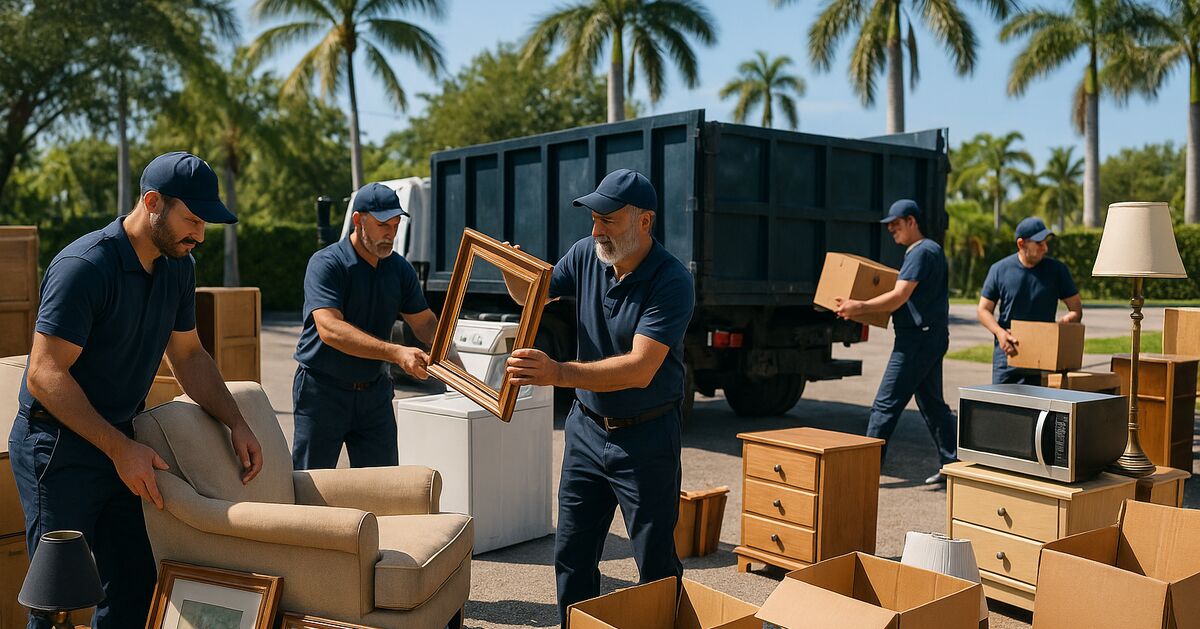
Your old recliner rolls onto the truck, the crew waves goodbye, and that's the last you see of it. But the story of that chair isn't over yet, and understanding where it goes next says a lot about the company you hired and the impact your cleanout has on the community around you.
This isn't a feel-good recycling lecture. It's a plain, practical explanation of the actual sorting, hauling, donating, and disposing that happens after the tailgate closes. Knowing the process helps you make smarter decisions before the truck even shows up, and it helps you choose a hauler who treats the work responsibly.
The first stop: a sorting facility, not always the dump
A common assumption is that junk removal trucks drive straight to the landfill. Most reputable haulers don't work that way. The first stop is usually a transfer station or the company's own staging area where items get a second look. Trained crew members walk through the load and pull out anything that can be resold, donated, or recycled.
This step matters more than people realize. Items that look like garbage in the context of a cluttered garage, a packed storage unit, or a deceased relative's home often have real value once they're cleaned off and seen clearly. A box fan buried under old newspapers, a set of hand tools coated in dust, a chest of drawers with a broken handle - all of these are candidates for a second life if someone takes the time to look.
The quality of this sorting step is one of the clearest differences between a legitimate local hauler and a cheap truck-and-driver operation. If you want to understand that distinction in more detail, our post on how to spot a legitimate Sarasota junk hauler vs. a fly-by-night dumper walks through exactly what to watch for.
Furniture: donation first, resale second, landfill last
Good-condition furniture is one of the most common items in a Sarasota junk removal load, and it's also one of the most recyclable in the social sense. There are several local and regional organizations that accept furniture donations, and many will take items directly from a hauler who has vetted the condition.
The catch is condition. Donation centers and thrift stores in the Sarasota area have their own standards. They typically will not accept:
- Upholstered furniture with visible mold, pet urine staining, or heavy odor
- Mattresses of any kind (Florida regulations make mattress donation nearly impossible for most facilities)
- Particle-board furniture that is falling apart or swollen from moisture
- Items with significant structural damage, broken legs, cracked frames
If your sofa is clean and structurally sound, there's a real chance it ends up in a donation stream. If it has been sitting in a humid Florida garage for several years and smells like it, it's going to the landfill. No hauler can donate furniture that a facility won't accept, and no facility is going to take a moldy couch just because it came from a well-meaning cleanout.
Sarasota's climate is genuinely tough on stored items. Humidity, heat, and occasional flooding accelerate the kind of damage that disqualifies furniture from donation. This is worth keeping in mind when you're planning a cleanout: items you've been storing "just in case" in a non-climate-controlled space may have crossed the donation threshold already.
Electronics: recycling is the only ethical path
Electronics, or e-waste, is one of the most regulated categories in a junk removal load. Televisions, monitors, printers, computers, phones, and similar items cannot legally go into standard landfill in Florida without processing. They contain heavy metals including lead, mercury, and cadmium that leach into soil and groundwater if buried improperly.
A responsible hauler separates electronics at the sorting stage and routes them to a certified e-waste recycler. These facilities dismantle devices, recover reusable components and precious metals, and process hazardous materials safely. The process isn't glamorous, but it's the right one.
This is one area where choosing a hauler carefully makes a measurable environmental difference. If a company is cutting corners on disposal, e-waste is one of the first things they'll throw into the general landfill load because it's easier. You have no way to verify what happened after the truck left unless you ask the company directly about their e-waste process and get a straight answer.
Appliances: freon, scrap metal, and careful handling
Appliances fall into a few different categories depending on what they are and what condition they're in.
Working appliances in good cosmetic shape may be donated or resold. Refrigerators, washing machines, dishwashers, and dryers that function properly have a genuine resale market in this area, and some haulers maintain relationships with used-appliance dealers or donation programs that accept them.
Non-working appliances are typically treated as scrap metal. Steel, aluminum, and copper from appliances have real scrap value, so a hauler who is doing their job will pull these out and sell them to a metals recycler rather than tossing them in the general waste load. This also reduces the volume going to the landfill, which is better for everyone.
The exception is refrigerators and air conditioning units, which contain refrigerant (freon or its modern equivalents). Federal law requires that refrigerant be recovered by a certified technician before the unit is scrapped. A legitimate hauler either has certified staff or a relationship with someone who does. An unscrupulous one might vent it into the air or simply ignore the requirement. Ask about this specifically if you have old refrigerators or window AC units in your load.
Metals, cardboard, and clean recyclables
Clean recyclable materials, including scrap metal, cardboard, clean glass, and some plastics, are separated from the general waste load at the sorting stage. Scrap metal in particular has consistent value and gives haulers a financial reason to sort carefully.
This is worth mentioning because it explains part of how junk removal pricing works. Loads that contain more metal or clean recyclables cost less to process than loads that are all landfill-bound waste, because the hauler can offset some costs through scrap revenue. The reverse is also true: loads that contain items requiring special handling, like hazardous materials or items requiring certified disposal, cost more to process. Our full services overview covers the different types of cleanout work and gives you a sense of what's involved in each.
Yard waste and organic material
Sarasota County has specific rules about yard waste, and responsible haulers follow them. Grass clippings, palm fronds, branches, and similar material have to be separated from regular trash and taken to appropriate composting or mulching facilities rather than a standard landfill.
This matters locally because Sarasota County and its surrounding communities, including Venice, North Port, and Englewood, are all surrounded by environmentally sensitive areas. The bay, the Gulf, the intracoastal waterways, and the area's aquifer system are all downstream of poor disposal choices. Organic material that decomposes in a landfill generates methane; the same material processed at a composting facility becomes mulch or compost that goes back into landscaping.
If yard debris is part of your cleanout, ask the hauler specifically how they handle it. It's a simple question with a clear right answer.
The landfill: where the rest goes, and why that's okay
Not everything can be recycled, donated, or resold. A portion of most junk removal loads ends up at the landfill, and that's a normal and acceptable outcome. The goal isn't zero landfill; it's minimum landfill, achieved through responsible sorting at every step before the truck reaches the gate.
Sarasota County uses Sarasota County's own solid waste facilities, and reputable local haulers have established accounts there. The fact that a hauler uses official county facilities matters because it means the waste is tracked, handled, and disposed of according to Florida Department of Environmental Protection standards. Illegal dumping, unfortunately, does happen in Florida. Loads that vanish into rural roads, vacant lots, or construction dumpsters that don't belong to the hauler are a real problem, and they create liability for the homeowner who hired the truck.
If you are curious about that risk and how to avoid it, our post on spotting a legitimate hauler covers the red flags in detail.
How your choices before the truck arrives affect what happens after
You actually have more influence over the downstream fate of your items than you might think. A few simple steps taken before the hauler arrives can meaningfully shift the ratio of donated versus landfilled items.
Separate the obvious donations. If you have items you know are in good condition, set them aside clearly and tell the crew when they arrive. This reduces the chance that usable items get tossed quickly during loading.
Keep electronics and appliances grouped. When e-waste and appliances are mixed into a general pile, they're more likely to get thrown in with general debris under time pressure. A simple cluster near the door makes sorting faster and more accurate.
Don't store items in damaged containers. Cardboard boxes that have been sitting in a Sarasota garage for years are often wet, moldy, or infested. When good items are stored in bad containers, the whole package can look like trash. Clear bins or bags signal that the contents may be worth checking.
Tell the crew what you care about. If there are items you hope will be donated, say so. A good hauler will note it and do their best, and they'll also be honest with you if the condition doesn't meet donation standards. That honesty is more useful than optimistic promises.
What a responsible hauler will and won't tell you
A hauler who is doing this job correctly should be able to tell you, in plain language, where your load goes. They should be able to name the facilities they use, explain how they handle electronics and appliances, and be honest about what percentage of a typical load they are able to divert from the landfill.
What they shouldn't do is make guarantees about specific items without seeing them, or claim that "everything gets donated" as a blanket selling point. No hauler donates everything. The condition requirements are real, and the logistics are real. Honest answers are the reliable ones.
If you have questions like these before booking, our FAQ page covers the most common ones, and you can always reach out directly through our contact page to ask about a specific situation.
What changes depending on where you are in our service area
The fundamentals of the sorting and disposal process are the same across our service area, but a few local details vary.
In Sarasota, proximity to county facilities makes routing efficient. In Venice and North Port, some loads travel a bit farther to reach the same facilities, but the destination is the same. In Englewood, which sits near the Charlotte County line, the hauler may use different facilities depending on where the load originates. On the barrier islands, including Siesta Key and Longboat Key, the logistics of getting a truck in and out add a step, but the disposal chain is identical.
If you're coordinating a cleanout in Osprey or Nokomis, the process is exactly the same as anywhere else in the area. Our full locations page has details on each community we serve.
Why this matters more than most people think
The downstream fate of your junk removal load isn't just an environmental question. It's a question of community impact, legal compliance, and basic honesty between you and the company you hired.
When a hauler sorts carefully, donates what they can, recycles what makes sense, and disposes of the rest at approved facilities, they're doing the job correctly. When they don't, the costs get transferred: to the county's illegal dumping cleanup crews, to the neighbors who find a couch on a back road, to the groundwater that absorbs improperly disposed chemicals, and to homeowners who later discover they're connected to an illegal dump through their own name on a contract.
Choosing a hauler who takes this seriously isn't a luxury. It's the basic standard for a job done right.
Whether you're clearing a garage, handling a full estate cleanout, or just getting rid of years of accumulated clutter, understanding where your items go gives you the information you need to make a good choice. The truck leaving the driveway is just the beginning of the process, not the end of your responsibility as the person who hired the job done.