
Fishing, hunting, and outdoor gear found during a Sarasota
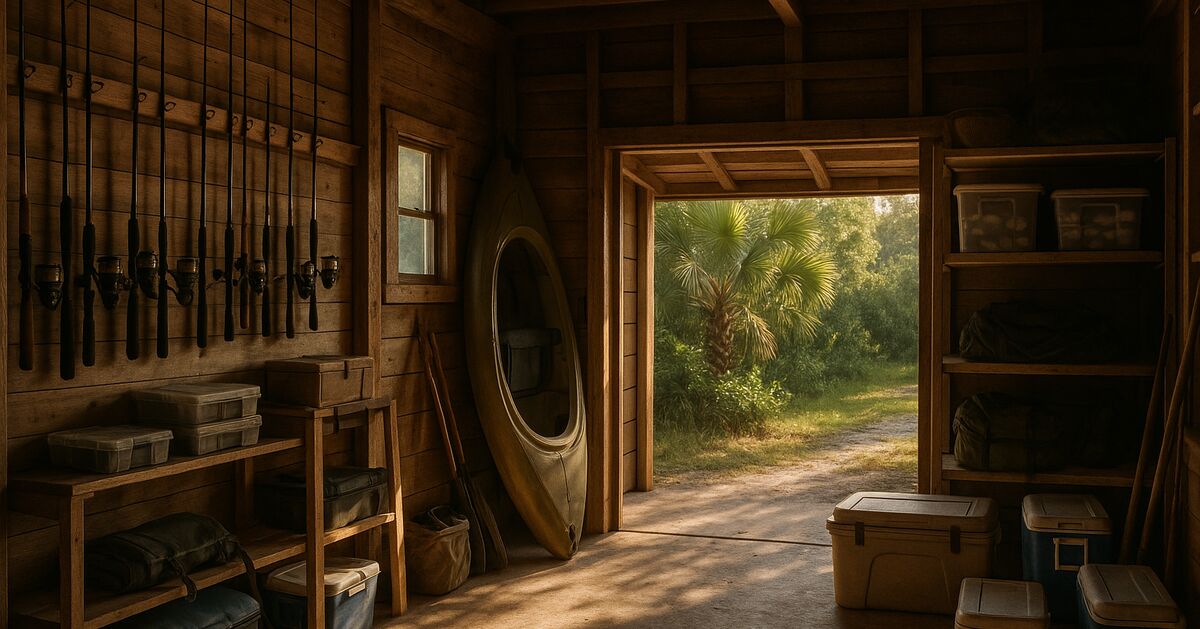
Rod racks from floor to ceiling, a chest freezer still packed with frozen bait, three gun safes, decoys stacked in the rafters, and enough tackle to stock a small marina. If you are settling the estate of someone who loved the outdoors, this scene probably sounds familiar.
Sarasota County has always drawn serious fishermen and hunters. The inshore flats off Siesta Key and Longboat Key, the offshore blue water, the bass lakes of North Port, the dove fields east of Englewood, the deer camps up toward the Peace River. People build entire lives around these pursuits, and decades of gear accumulates quietly in garages, sheds, storage rooms, and boat bays. When you are suddenly responsible for sorting it all out, it can feel like you inherited a second job.
This guide walks you through the practical decisions, the order of operations, and the honest realities of handling a full outdoor sportsman's estate cleanout in Sarasota County.
Start by taking a breath and doing a rough inventory
Before you move a single item, walk every space with your phone camera rolling. Garages, sheds, attics, under beds, in closets, in the bait freezer, in the truck bed. Outdoor enthusiasts rarely keep all their gear in one place, and it is easy to donate or toss something valuable because you did not realize it was tucked behind a shelf.
A rough inventory does not need to be a spreadsheet. Video is fine. You are looking for three categories:
- Potentially high value (firearms, quality reels, branded rods, optics, rangefinders, quality kayaks or canoes, waders in good condition)
- Sellable but not premium (general tackle, hand tools, camp furniture, coolers, bait buckets, life jackets, older but functional gear)
- Dispose only (rusty hooks, cracked rod blanks, mildewed tarps, broken net frames, expired flares, deteriorated waders, empty or corroded aerosol cans)
This rough sort helps you make smart decisions before anything leaves the property.
Firearms and ammunition: this step comes first
If there are firearms in the home, handle them before anything else. This is not optional. Guns have legal implications, safety implications, and significant financial value.
What to do right away:
- Locate all firearms, including handguns in nightstand drawers, rifles in closets, and shotguns in soft cases leaning in the corner of the garage.
- Do not transport loaded firearms in your personal vehicle unless you are familiar with your state and local laws.
- Do not assume a gun safe is empty just because it is locked. Contact a locksmith or the safe manufacturer for access before the cleanout progresses.
Options for estate firearms:
Firearms can be transferred to heirs through a licensed FFL dealer. They can be sold through a local gun shop or consigned. They can also be surrendered to law enforcement if no one in the family wants them. What you cannot do is simply toss them, donate them to a thrift store, or transport them across state lines without following proper procedure.
For ammunition, most gun shops or shooting ranges will take loose ammunition. Do not pack it tightly in sealed boxes and throw it in the trash.
This step deserves its own morning before you dive into rods and tackle.
Fishing gear: where the real dollar value often hides
Fishing gear is one of the most underestimated categories in any outdoor estate. Families often donate or trash items that are worth real money, simply because they do not fish and have no frame of reference.
Items that can carry serious resale value:
- High-end spinning and baitcasting reels (Shimano Stella, Daiwa Saltiga, Penn International, Abu Garcia Ambassadeur)
- Quality saltwater rods (custom-wrapped guides, roller tips, name-brand blanks)
- Fly fishing gear, especially quality fly reels and full fly lines
- Electric trolling motors in working condition
- Downriggers, fish finders, and marine electronics (check if they still power on)
- Lure collections, especially vintage plugs, hand-poured soft baits, or limited production lures
What is usually not worth much:
- Generic discount-store rods and reels
- Monofilament line that has sat for years (it degrades)
- Hooks, swivels, and weights (donate in bulk to a scout troop or a youth fishing club)
- Tackle boxes that are a rusted jumble of miscellaneous hardware
The best move for high-value fishing gear is a quick consultation with a local tackle shop. Many shops in the Sarasota area will look at a collection and give you an honest read on what is worth consigning or selling outright. They know what sells locally because they sell it every day.
Hunting gear: decoys, blinds, calls, and clothing
Hunting gear presents a similar challenge. Families who did not hunt alongside the deceased often have no idea what they are looking at.
Items worth keeping separate for valuation:
- Quality optics (rifle scopes, binoculars, rangefinders from Leupold, Vortex, Swarovski, Zeiss)
- Decoys in good condition, especially full-body turkey or deer decoys
- Tree stands and climbing sticks from quality manufacturers (check for recalled models, as some older stands were subject to safety recalls)
- Quality hunting clothing in wearable condition (Sitka, First Lite, Kryptek)
- Hunting boots that are not cracked or mildewed
Items that typically go straight to disposal:
- Worn-out camouflage clothing with mildew or animal scent spray baked in
- Cracked plastic decoys
- Old climbing stands with worn straps (safety issue, and not easily resellable)
- Expired calls, broken bipods, corroded accessories
Hunting gear moves well at local sporting goods consignment shops, online through Facebook Marketplace, or through local hunting clubs. The North Port and Englewood areas have active hunting communities that are often glad to buy quality used gear at fair prices.
Camping, kayaking, and general outdoor gear
Beyond fishing and hunting specifics, outdoor estates often contain a full camping and paddling setup. Some of this is genuinely useful and resellable.
Higher value items to separate:
- Kayaks and canoes (fiberglass or quality composite kayaks can be worth several hundred dollars)
- Quality tents from premium manufacturers (REI, MSR, Big Agnes)
- Camp stoves, especially dual-fuel or quality propane systems
- Dry bags, quality packs, and hydration systems
- Waders in functional condition without cracked seams
Propane and fuel: a specific caution
Propane tanks and partially used fuel canisters cannot simply be tossed in a junk pile. Small backpacking canisters can be emptied and recycled if the fuel is gone. Standard 1-pound green propane cylinders are tricky because they are not refillable and not widely accepted for recycling. Larger 20-pound tanks can be exchanged or returned to a propane supplier.
For any camp stove fuel, white gas, or similar products, treat them as you would any flammable liquid. Sarasota County has household hazardous waste drop-off options for these items. Our post on medications, chemicals, and hazardous items found in a Sarasota estate cleanout covers the broader hazardous materials picture if you have a mix of problem items.
Who should you call first?
The answer depends on the scale of what you are dealing with.
For a modest collection (a few rods, a tackle box, some camp gear), handle valuation and donation yourself. A local tackle shop, a thrift store like Goodwill or Habitat for Humanity ReStore, or a Facebook Marketplace post will move most of it.
For a full sportsman's estate (multiple gun safes, a wall of rods, thousands in tackle, a kayak, a trailer, a garage packed with gear), you are looking at a multi-step process:
- A licensed firearms dealer handles the guns first.
- A tackle shop or sporting goods consignment shop assesses the fishing and hunting gear.
- Valuable optics and electronics get listed for sale or taken to a consignment shop.
- Everything that does not sell, donate, or get transferred gets hauled away.
That last step, the hauling away of what remains, is where a professional junk removal crew earns its keep. By the time you have pulled out the high-value items, you are still left with a garage or shed full of broken, worn-out, or outdated gear that needs to go. A crew that knows what they are doing can clear a full outdoor garage in a single day, sort what can be donated along the way, and load everything else properly for disposal.
If you are dealing with a larger cleanout that goes beyond just the outdoor gear, our full estate cleanout and junk hauling services cover the whole property, not just one room.
What junk haulers will and will not take
A legitimate junk removal crew will haul the vast majority of outdoor gear without issue: old rods, broken reels, worn-out waders, canvas tarps, metal shelving, camp furniture, coolers, nets, wire crab traps, cast iron anchors, you name it.
What requires special handling:
- Firearms and ammunition (must go through proper legal channels, not a junk truck)
- Propane tanks above a certain size (check with your hauler)
- Marine flares (expired flares are a hazardous material)
- Gasoline or diesel stored in cans
- Large lithium batteries from marine electronics or trolling motors
A professional crew will flag these items and let you know what to do with them, rather than quietly tossing them in the truck and creating a liability problem. If you are unsure how to vet a hauler, our guide on how to spot a legitimate Sarasota junk hauler vs. a fly-by-night dumper is worth a read before you book anyone.
The emotional side of a sportsman's estate
This one comes up more often than people expect. Fishing rods, hunting knives, and favorite lures carry a lot of memory. Families sometimes feel guilty donating or selling gear that their father or grandfather used for decades.
A few thoughts on that:
- It is okay to keep one or two meaningful items even if you do not fish or hunt. A favorite rod, a well-worn tackle box, a pair of binoculars can hold a place on a shelf as a genuine keepsake.
- Selling quality gear to someone who will actually use it is a form of respect for the hobby, not a dismissal of it. A teenager who gets a quality spinning reel at a fair price will put it to good use.
- Donating to a youth fishing program or a local 4-H shooting sports team means the gear continues to serve the same purpose it always did.
You do not have to treat this as pure logistics. But you also should not let sentiment freeze the process entirely. If the cleanout timeline is driven by an estate sale, a property closing, or a rental turnaround, the clock is real.
Local resources worth knowing in Sarasota County
- Sarasota County Household Hazardous Waste accepts fuels, flares, and certain chemicals at no charge on designated collection days.
- Local tackle shops along the Tamiami Trail and near the marinas in Venice and Nokomis are often willing to appraise collections.
- FFL dealers in Sarasota and North Port can handle firearms transfers, appraisals, and estate gun sales.
- Fishing and hunting clubs in the county often have members who are actively looking for quality used gear and can move items quickly through their networks.
For families managing an estate across multiple properties or a large home with years of accumulation, the locations page shows exactly where we work throughout Sarasota County, from Longboat Key down through Venice and into North Port and Englewood.
Putting it all together
An outdoor sportsman's estate is genuinely more complex than a typical cleanout, but it is manageable when you take it in order. Firearms first, always. Then valuation of quality gear before anything leaves the property. Then donation and sale of usable items. Then professional hauling of what remains.
The families we work with in Sarasota, Venice, North Port, and Englewood are often surprised at how quickly a packed garage clears once there is a plan and a crew on site. What feels overwhelming on day one usually looks very different by the end of a full workday.
If you are at the beginning of that process and not sure where to start, reach out to us for a no-pressure conversation about what you are working with. We have seen the full range, from a single rod rack to garages that look like a sporting goods store exploded inside them, and we can help you figure out the right path forward.