
Medications, chemicals, and hazardous items found in a
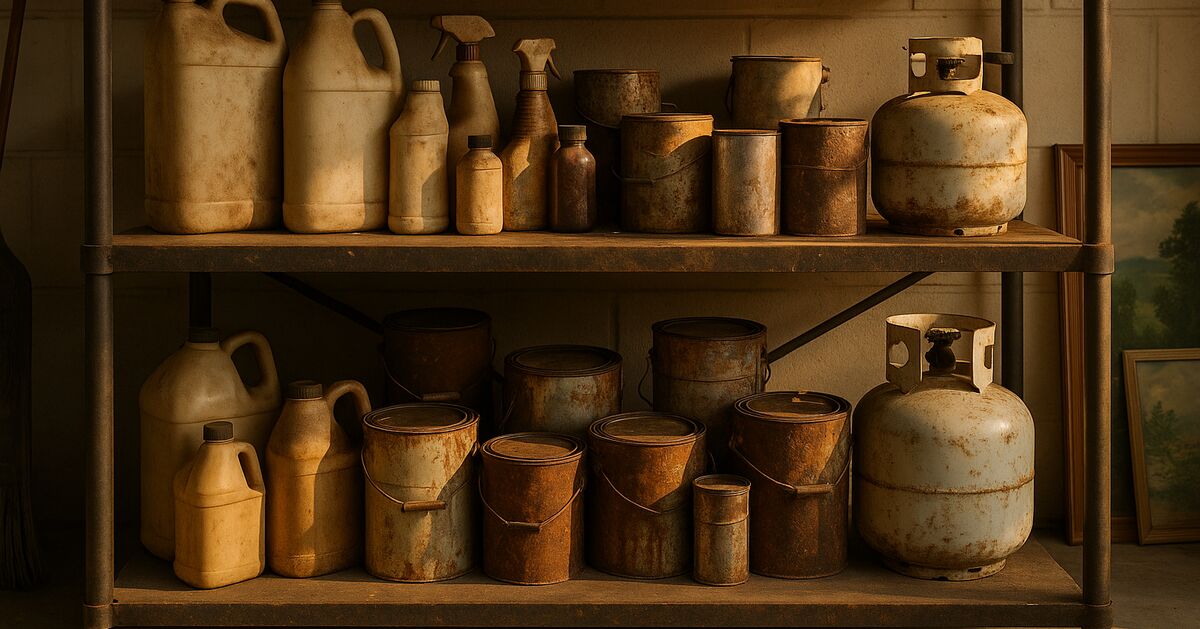
Hazardous materials don't announce themselves. One afternoon you're clearing a closet in a North Port home and you find a shoebox stuffed with prescription bottles going back fifteen years. The next hour you're in the garage staring at a shelf of unlabeled aerosol cans, a corroded car battery, and a jug of something that used to be herbicide. This is one of the most common surprises in any serious estate or hoarder cleanout, and it's also one of the most mishandled.
Tossing these items in a regular trash bag is not only illegal in Florida, it can hurt sanitation workers, contaminate the local waste stream, and create liability for the person managing the estate. The good news is that Sarasota County has real, workable disposal options for almost everything you'll find. You just need to know what goes where.
This guide walks through the main categories of hazardous materials that show up during cleanouts across Sarasota, Venice, Englewood, Osprey, Nokomis, and beyond, and tells you exactly how to handle each one.
Why hazardous items are so common in estate and hoarder cleanouts
People accumulate things over decades. A homeowner who lived in a house for thirty years might have pesticides from a product line that was discontinued in the 1990s. A parent with multiple chronic conditions might have a medicine cabinet overflowing with half-used prescriptions, some of which belonged to a spouse who passed years ago. Hoarder households often have duplicates or triples of everything, including cleaning chemicals that were never opened or were stored improperly and are now degraded.
Florida's heat and humidity make this worse. Chemicals that might last years in a cool, dry basement break down faster here. Labels peel off. Containers corrode. What was once a clearly labeled bottle of pool shock is now a mystery white powder in a crusty container.
This is not about blame. It's just the reality you'll encounter, and recognizing it early helps you plan properly before you're mid-cleanout with nowhere to put something dangerous.
Prescription and over-the-counter medications
Medications are usually the first hazardous category people encounter and the one they feel most uncertain about.
What NOT to do:
- Do not flush medications down the toilet. Florida's waterways, including those around Siesta Key and Longboat Key, are sensitive ecosystems. Pharmaceuticals that pass through wastewater treatment end up in surface water and affect aquatic life.
- Do not throw bottles directly into the trash. This is both an environmental issue and a security issue, since certain controlled substances can be retrieved and misused.
What TO do:
The best option in Sarasota County is a DEA-authorized drug take-back location. These are permanent drop-boxes located at many Sarasota County Sheriff's Office substations and some local pharmacies. You can drop off prescription medications, controlled substances (with some exceptions), and over-the-counter drugs with no questions asked and no appointment required.
For situations where you have a very large volume of medications (common in hoarder cleanouts), call the Sarasota County Sheriff's Office non-emergency line to ask about bulk drop-off procedures. They have handled estate situations before and can advise you.
If a take-back location isn't immediately accessible, the FDA-approved at-home disposal method is to mix the medications with something undesirable (used coffee grounds or dirt work well), seal the mixture in a bag, and place it in the household trash. This is a last resort, not the first choice.
Sharps (needles, lancets, syringes) are a separate category. These must go into a puncture-resistant sharps container before disposal. Sarasota County has a sharps disposal program. You can find collection sites through the county's solid waste services department.
Household chemicals and cleaning products
A typical estate cleanout in the Sarasota area will turn up some combination of the following:
- Partially used bottles of bleach, ammonia, or drain cleaner
- Old paint (latex and oil-based)
- Solvents such as paint thinner, turpentine, or acetone
- Oven cleaners, rust removers, and other caustic products
- Pool chemicals (chlorine tablets, shock, algaecide, pH adjusters)
- Fertilizers and lawn care products
The most important rule: never mix unknown chemicals, and never open a container just to smell it. Some combinations (bleach and ammonia, for example) produce toxic gas almost instantly. If a label is missing, treat the container as you would treat a labeled hazardous product.
Where these go:
Sarasota County Solid Waste operates a Household Hazardous Waste (HHW) program. The drop-off facility is located at the Sarasota County Solid Waste Disposal Complex on Moccasin Wallow Road. This is the right destination for virtually every household chemical category listed above. The service is free for Sarasota County residents.
Important: call ahead or check the county's current schedule before making the trip. Hours can change, and certain items have specific acceptance rules. Charlotte County (which covers parts of the Englewood area) has its own HHW drop-off, so if you're working in that zone, check with Charlotte County Solid Waste.
A note on pool chemicals: these deserve extra caution. Oxidizers and chlorine compounds can react violently if they've been stored improperly or if different products have been mixed. Do not consolidate pool chemicals into a single container. Transport each original container separately, keeping them upright and well-ventilated in your vehicle. Never put them in a closed trunk.
Oil-based paint vs. latex paint: latex (water-based) paint that is completely dried out can actually go in regular trash in Florida. If you have latex paint that's still liquid, let it dry in the open air (outdoors, away from ignition sources), then bag it. Oil-based paint is always hazardous and goes to the HHW facility.
Pesticides, herbicides, and agricultural chemicals
Florida homeowners use a lot of pest control products. In a home that's been occupied for decades, you may find:
- Old termite treatments (some pre-1990s formulations were extremely toxic)
- Rodent poisons (rodenticides)
- Ant, roach, and mosquito sprays
- Herbicides and weed killers, including older concentrated formulas
Many of these are acutely toxic even in small amounts, and some older products contain chemicals that have since been banned. Don't attempt to use them up or give them away.
All of these go to the Sarasota County HHW facility. If you find something genuinely alarming (a large quantity of an agricultural chemical, or something in an industrial-sized container), contact Sarasota County Solid Waste before transporting it to ask for guidance. They've handled unusual situations and can tell you if a special drop-off arrangement is needed.
Propane tanks and other compressed gas cylinders
Propane tanks from grills are one of the most commonly encountered hazardous items during a garage or outdoor cleanout, especially in areas like Englewood and North Port where outdoor living space is abundant. Smaller "camping" cylinders are found even more frequently.
Small 1-lb camping cylinders: these cannot go in the trash or recycling while pressurized. Many hardware stores accept them. If they are fully empty and punctured (not just "used"), some municipalities allow trash disposal, but check locally first.
Standard 20-lb grill tanks: these can be exchanged at hardware and grocery store exchange programs (Blue Rhino and similar). If they're old or damaged and can't be exchanged, take them to a propane dealer for proper disposal. The HHW facility does not typically accept large propane tanks.
Other compressed cylinders (helium tanks, CO2 cylinders, fire extinguishers): most scrap metal yards and some specialty recyclers handle these. A partially charged fire extinguisher can also be recharged and donated to a local fire station or nonprofit.
Batteries
Batteries are found everywhere in a cleanout: in remote controls, flashlights, smoke detectors, cameras, laptops, and even stored loose in a kitchen junk drawer. They're easy to overlook as hazardous, but certain types absolutely are.
- Alkaline AA/AAA/C/D batteries: in Florida, these are currently legal to throw in the trash, though recycling is better. Many hardware stores have drop boxes.
- Lithium and lithium-ion batteries (laptop, phone, tablet, power tool): these cannot go in the trash. They pose a fire risk in garbage trucks. Best Buy, Home Depot, and other retailers have free lithium battery recycling programs.
- Lead-acid car and marine batteries: these are highly recyclable and have real scrap value. Auto parts stores (AutoZone, Advance Auto Parts, O'Reilly) accept them for free, and some will pay a small amount per battery.
- Rechargeable NiMH and NiCd batteries: Call2Recycle drop boxes are located at many home improvement and electronics retailers throughout the Sarasota area.
Automotive fluids and garage chemicals
Estates with longtime homeowners often have a full shop's worth of old automotive products.
- Motor oil: this is one of the most recyclable hazardous materials there is. AutoZone, O'Reilly, and many oil change shops accept used motor oil for free. Do not mix it with other fluids.
- Transmission fluid, brake fluid, power steering fluid: most auto parts stores accept these as well. Keep them in separate, labeled containers.
- Antifreeze: this is acutely toxic to animals and children. It should go to an auto parts store that accepts it or to the HHW facility. Do not pour it on the ground.
- Gasoline: old or degraded gasoline is handled by the HHW facility. Transport it in an approved fuel container.
What a junk hauler can and cannot take
A professional junk hauler handles the vast majority of items in any cleanout: furniture, appliances, general debris, mattresses, electronics, yard waste, and much more. But hazardous materials are outside the scope of standard junk removal, and any legitimate hauler will tell you that upfront.
If a company offers to haul away your prescription bottles, pool chemicals, and pesticides along with the sofa and the broken treadmill with no special handling, that's a red flag. Read more about spotting a legitimate junk hauler versus a fly-by-night dumper before you hire anyone.
The right approach for a large cleanout is to pre-sort hazardous materials before the hauling crew arrives, or to work with your hauler to stage the cleanout so hazardous items are set aside for proper disposal while everything else gets loaded and removed. Our team is experienced with exactly this kind of coordination. You can learn more about the full range of cleanout services we offer, including estate and hoarder house cleanouts where this situation comes up regularly.
Building a disposal plan before you start
The most important thing you can do is plan before you're standing in a hot garage in North Port or Nokomis with a cart full of mystery containers.
Here's a simple framework:
- Do a walkthrough first. Before moving anything, do a slow lap of the property specifically looking for hazardous materials. Check under sinks, in the garage, in closets, in sheds, and in any storage areas. Note what you find.
- Get boxes or bins labeled by category. Medications in one box. Pool chemicals in another. Automotive fluids separate. This prevents accidental mixing and makes drop-off easier.
- Identify your disposal sites in advance. Know where your nearest HHW facility is, which pharmacy or sheriff's office has a medication drop-box, and which auto parts stores you'll use for oil and batteries.
- Dispose of hazardous items before the hauling day. This keeps the cleanup moving and ensures your hauler can focus on what they're equipped to handle.
If the sheer volume of the project feels overwhelming, contact us before you start. We can help you think through the sequence, identify what needs special handling, and build a realistic timeline. We serve the full area from Sarasota and Venice down through Englewood and across to Longboat Key, and we've worked through situations exactly like this many times.
A few things that catch people off-guard
Mercury thermometers and fluorescent bulbs: these contain mercury and should not go in the trash. The HHW facility accepts them. This comes up frequently in older homes.
Smoke detectors: ionization-type smoke detectors contain a tiny amount of americium-241, a radioactive material. They cannot go in regular trash. The manufacturer (or Kidde/First Alert's mail-back program) is the right disposal channel.
Old electronics: televisions, monitors, and computers may contain lead, cadmium, and other hazardous materials. These go to an e-waste recycler, not the trash. Goodwill in the Sarasota area accepts some electronics.
Mold-contaminated items: not a chemical hazard exactly, but worth mentioning. In a Florida home that's had any water intrusion, you may find heavily mold-covered items. Bagging these separately before hauling is the right call. For more on what to do after water damage, the post on junk removal after a Sarasota flood or storm covers that ground in detail.
The bottom line
Hazardous materials are a routine part of estate and hoarder cleanouts in this part of Florida. They're not a disaster. They just require a little planning, a pre-sort, and a couple of extra trips to the right drop-off locations. Sarasota County's HHW program, the DEA take-back network, and retailer recycling programs together cover nearly everything you'll encounter.
A good junk hauler will respect the boundary between what they can haul and what needs special handling. The combination of proper hazardous disposal and a professional crew for everything else is how a large cleanout gets done safely, legally, and without loose ends.
If you have questions about how to stage a cleanout in the Osprey or Nokomis area, or anywhere else we serve, our FAQ page covers a lot of common questions, and we're always happy to talk through the specifics of your situation directly.