
Longboat Key high-rise cleanout: elevator rules, loading
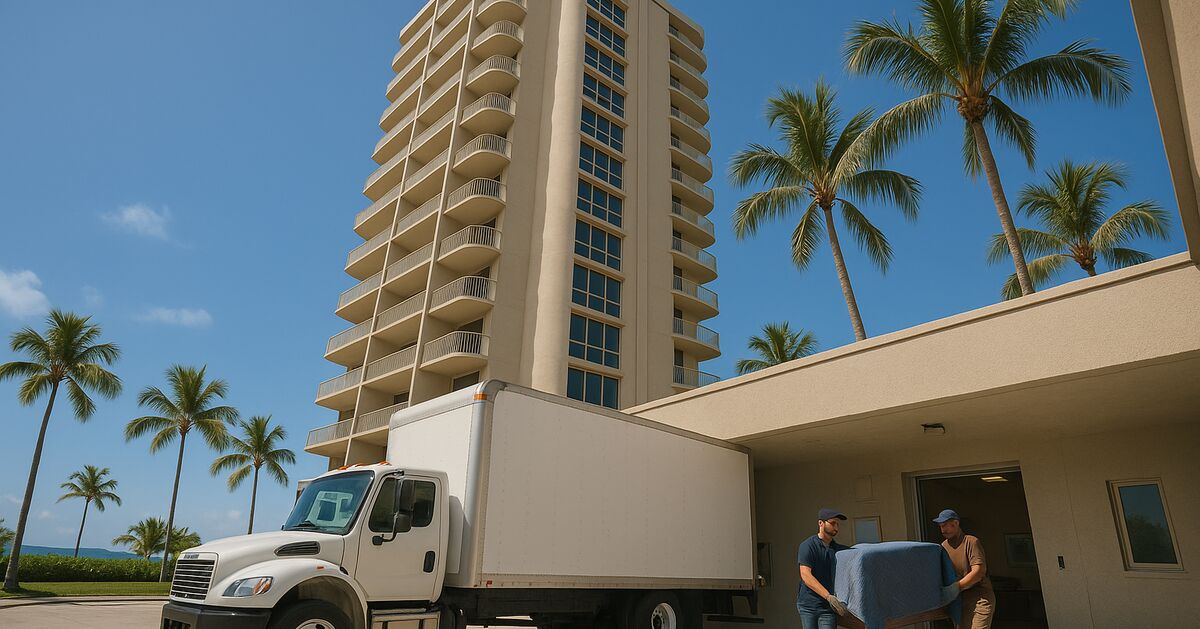
Longboat Key is one of the most beautiful barrier islands on Florida's Gulf Coast, and a lot of people spend decades building a life there, filling a condo with furniture, artwork, clothing, kitchenware, and a lifetime's worth of belongings. When it comes time to clear that unit out, whether after a death, a move to assisted living, a sale, or just a long-overdue purge, the physical reality of a high-rise cleanout hits fast. The building itself becomes the job.
If you've only ever hired junk haulers for a house, a garage, or a ground-floor unit somewhere, a Longboat Key high-rise is a genuinely different experience. The elevator has rules. The loading dock has a schedule. The HOA has opinions about all of it. And the time that building adds to the work is exactly why the price is higher than a comparable volume of stuff in a single-family home on the mainland.
This post walks through all of it, not to scare you off, but so you know what you're walking into and can plan accordingly.
Why high-rise cleanouts take longer than they look
The core issue is vertical distance and controlled access. In a house, workers can carry items out a front door, a side door, or a garage directly to a truck parked at the curb. In a high-rise on Longboat Key, every single item has to travel a fixed route: out the unit door, down a hallway, into an elevator, down however many floors, through a lobby or service corridor, out to a loading dock or designated area, and then into the truck. That sequence can't be shortcut.
Now multiply that route by a sofa, a dining table, a king mattress, eight chairs, three bookcases, a flat-screen TV, a dozen boxes of miscellaneous items, and whatever else fills a two or three-bedroom unit. Every single trip follows the same path. At peak efficiency, a two-person crew doing this in a 10-story building might spend a third of their working time just in transit between the unit and the truck, and that's before any building rules slow things down further.
This is not inefficiency on the hauler's part. It's the physics of the building.
Elevator rules: what buildings actually enforce
Nearly every Longboat Key high-rise with an elevator has some form of elevator protection policy. The specifics vary by building, but the common requirements include:
- Padding or blankets must be hung in the elevator cab before any furniture or heavy items are moved
- Only the service elevator (if the building has one separate from the main elevator) may be used for move-outs
- The elevator must be reserved in advance, sometimes requiring a deposit
- There are time limits on how long the elevator can be held, often 2 to 4 hours
- Certain hours are off-limits entirely, typically early morning, evenings, and weekends, to avoid disrupting residents
A good hauler will ask the building management about all of this before the day of the job. A less experienced crew that shows up assuming they can just use the elevator freely will either get stopped by building staff or will irritate neighbors in ways that come back to you as the unit owner.
If your building only has one elevator and it serves all residents, you may need to coordinate very carefully around peak usage times. Some Longboat Key buildings require 48 to 72 hours advance notice just to reserve elevator time. That scheduling constraint alone can affect when a cleanout can happen.
Loading dock windows: the scheduling piece most people overlook
Even if the elevator is available, most high-rises on Longboat Key control when and where trucks can park and load. Loading docks are typically restricted to certain hours, often something like 8 a.m. to 5 p.m. on weekdays, with no access on Sundays or holidays. Some buildings require the hauling company to submit proof of insurance and a certificate of liability before they're allowed to use the loading area at all.
The loading dock window effectively caps how much work can be done in a day. If a crew arrives at 8 and the dock closes at noon for a resident event, the job stops at noon. Period. That might mean a large cleanout requires two separate days and two separate dock reservations, which adds cost and coordination time.
On Longboat Key specifically, seasonal population density matters too. During winter months when snowbird residents are in their units, building management tends to be stricter about scheduling and less flexible about exceptions. If you're planning a cleanout between November and April, build in extra lead time.
What the HOA actually controls (and what it doesn't)
The HOA on a Longboat Key high-rise typically governs the common areas of the building, not the interior of your unit. That means they control the elevator, the loading dock, the hallways, the lobby, and the exterior. They can tell a hauler exactly how to move things through those spaces. What they generally cannot do is dictate what you remove from inside your own unit or which hauler you hire, provided that hauler meets the building's insurance requirements.
This is worth knowing because some unit owners feel anxious about the HOA's level of involvement. The HOA isn't there to block your cleanout. It's there to protect the building's common areas from damage and to keep the process from disrupting other residents. A professional hauler who has worked in high-rises before will know how to communicate with building management, get the right approvals, and work within the building's framework without making your life harder.
For a broader look at how HOA rules shape condo cleanouts on the barrier islands, the post on Siesta Key condo cleanout: what the HOA actually controls covers a lot of the same territory and is worth reading alongside this one.
The insurance requirement: why some haulers get turned away at the door
A lot of Longboat Key high-rises require any vendor working in the building to carry a specific level of general liability insurance and name the building's HOA or management company as an additional insured on the certificate. This is standard practice and completely reasonable. It protects the building if something gets damaged during the move.
The problem is that not every junk hauler carries adequate insurance or is willing (or able) to provide a certificate of insurance on short notice. If a hauler shows up at the building and can't produce the required paperwork, building management can and will turn them away. You're then stuck with a truck full of people, no access to the loading dock, and a cleanout that doesn't happen.
Before you book anyone for a Longboat Key high-rise cleanout, ask directly: do you carry general liability insurance, and can you provide a certificate of insurance naming the building's management company? A qualified hauler will say yes without hesitation. Our frequently asked questions page covers what to ask when vetting a hauler, and it's a useful reference before you make any calls.
Why the price is genuinely higher
Let's be direct about the cost piece, because it comes up every time.
A Longboat Key high-rise cleanout costs more than hauling the same volume of items from a house or ground-floor condo, and the reasons are straightforward:
- Time in transit. Every item travels a longer, more controlled route. That time is labor, and labor is the biggest cost in any cleanout.
- Crew size. High-rise work often requires more people to keep things moving efficiently through the elevator and hallway sequence.
- Scheduling constraints. If the job requires two dock windows on two separate days, that's essentially two mobilizations.
- Insurance and compliance. Buildings that require additional-insured certificates add administrative time and sometimes a small cost.
- Elevator pads and prep. Professional haulers bring the protective materials needed to satisfy building rules, and that's baked into the service.
None of these are hidden fees or surprises if your hauler explains them upfront. They're just the honest cost of doing the job correctly in a building with real rules. A hauler who quotes you the same flat rate they'd charge for a garage cleanout in North Port either hasn't done high-rise work before or isn't accounting for the actual time the job will take.
If you'd like to understand what goes into the pricing before you commit to anything, reach out for a free estimate and walk us through the building details. The unit floor, the elevator situation, the building's insurance requirements, and the volume of items all factor in, and we'd rather give you an honest number upfront than have an awkward conversation on the day of the job.
What to do before the hauler arrives
Getting a few things sorted in advance makes the actual cleanout go faster, which saves time and money.
Talk to building management first. Find out the elevator reservation process, the loading dock hours, and the insurance requirements. Get the rules in writing if you can. The hauler you hire will need this information, and having it ready saves everyone time.
Sort what you can ahead of time. If you know certain items are going to a family member, a consignment shop, or a charity, have those separated and clearly labeled before the crew arrives. Time spent in the unit deciding what stays and what goes is time the clock is running.
Check for items that can't be hauled. Certain materials, including paint, propane, batteries, and certain electronics, may not be accepted by a standard junk hauler. Knowing what you have and asking about it in advance avoids a last-minute scramble. Our services page outlines what we typically handle.
Plan for the unexpected. High-rise cleanouts almost always turn up something nobody anticipated. A storage closet that's more full than anyone remembered. A piece of furniture too large for the elevator that has to be broken down. Building management asking for additional paperwork. Build a buffer into your timeline and don't schedule anything critical for the afternoon of a morning cleanout.
Estate and hoarder cleanouts in high-rises
Longboat Key high-rise units come up in estate cleanouts regularly, and they present the same emotional weight as any other estate situation, with the added layer of building logistics on top of it. When families are already dealing with grief, a disagreement about belongings, or the stress of a probate timeline, the last thing they need is a hauler who doesn't know how to navigate the building.
If you're managing an estate cleanout in a Longboat Key building and heirs have different opinions about what to keep, the post on Sarasota estate cleanout when heirs can't agree on what to keep addresses that dynamic directly. And if the unit has accumulated to a level that goes beyond a typical cleanout, our team handles those situations with the same straightforward, judgment-free approach we bring to every job.
Longboat Key is a specific place with specific logistics
It bears saying plainly: Longboat Key is not a quick run from the mainland. It's a barrier island with one primary access point from the north via the Longboat Key bridge and another from the south at the Ringling Causeway. Traffic patterns, particularly during season, affect how long it takes a truck to get on and off the island. That's not a complaint, it's just a logistical reality that factors into scheduling.
We serve Longboat Key regularly and understand how the island works. We also work throughout the surrounding area, including Sarasota, Siesta Key, Osprey, Nokomis, Venice, and North Port. If you're coordinating a cleanout across multiple properties or a split estate, we can handle the logistics across locations.
The short version
Longboat Key high-rise cleanouts cost more and take more planning than a typical house cleanout because the building itself adds real constraints: elevator rules, loading dock windows, insurance requirements, and longer transit time for every item. A hauler who has done this kind of work before will know what questions to ask the building, how to protect the common areas, and how to get the job done without creating problems for you with building management.
If you're facing a cleanout in a Longboat Key high-rise and want to talk through the specifics, get in touch and let's work out what the job actually looks like before anything is booked. Getting the planning right at the start is the thing that makes these jobs go smoothly.