
Construction site cleanout when your Sarasota contractor
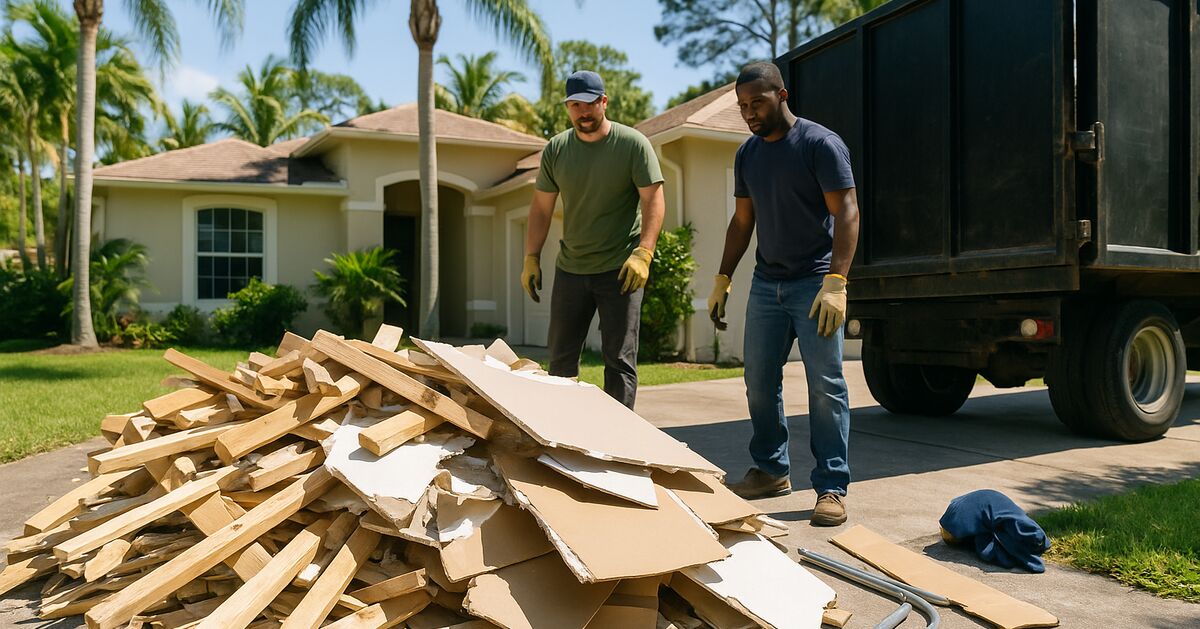
Your contractor just drove away for the last time, and you are standing in your driveway staring at a yard full of lumber off-cuts, torn drywall, bent nails, shrink wrap, and enough cardboard to fill a small warehouse. This is one of the most common calls we get from homeowners across Sarasota, Venice, North Port, Englewood, and the surrounding communities, and it catches people off guard every single time. You hired a contractor to build or renovate something, not to live with a construction dump on your property. This guide walks you through every step of cleaning it up, from figuring out what you actually have to getting it hauled away legally and efficiently.
Why contractors leave debris behind (and why it is your problem now)
Most homeowners assume debris removal is part of the contract. Sometimes it is. Often it is not, or it is buried in an exclusion buried in the fine print. Contractors may include language like "site broom-clean," which means they sweep the floors but leave the dumpster contents, the staging area pile, and the overflow scraps right where they are. On larger jobs in Sarasota County, a contractor might have ordered a roll-off dumpster that got picked up with material still on the ground beside it. On smaller jobs in Nokomis, Osprey, or Longboat Key, a crew may have genuinely assumed the homeowner would handle the last pile.
Whatever the reason, the debris is yours now. Ignoring it creates real problems: HOA fines in many Sarasota neighborhoods, code enforcement complaints in North Port and Englewood, rain-soaked drywall turning into mold in the Florida heat, and sharp debris like nails and screws becoming a hazard for kids and pets. The faster you act, the simpler and cheaper the cleanout becomes.
Step one: take a full inventory before you touch anything
Walk the entire property before you move a single piece of debris. Bring your phone and photograph everything from multiple angles. This matters for two reasons.
First, if you have any dispute with your contractor, you need documentation of exactly what they left and where. Timestamped photos are your best evidence.
Second, a complete inventory helps you sort the material correctly before any hauling crew arrives. Mixed loads cost more to process because they require sorting at the facility. When you know what you have, you can separate it at the source and potentially save money.
Look for these common categories after a Sarasota construction job:
- Wood waste - lumber off-cuts, trim pieces, plywood scraps, pallet wood
- Drywall and plaster - broken sheets, corner bead, joint compound buckets
- Metal - conduit scraps, copper wire off-cuts, steel framing, ductwork pieces
- Packaging - cardboard, shrink wrap, foam, plastic banding
- Concrete and masonry - broken block, mortar bags, tile grout buckets
- Roofing materials - shingle scraps, felt paper, ice-and-water shield remnants
- Insulation - fiberglass batts, rigid foam boards, spray foam cans
- Hazardous items - paint cans, caulk tubes, adhesive containers, solvents
That last category deserves special attention. Paint cans and chemical containers cannot go in a standard haul. Liquid paint, primers, and solvents need to go through Sarasota County's household hazardous waste program. Our earlier post on medications, chemicals, and hazardous items found in a Sarasota estate cleanout covers the handling principles in detail, and they apply just as much to construction leftovers as to estate situations.
Step two: separate what can be donated or recycled
Before you call a hauler, spend thirty minutes pulling out materials with real value. This step is worth it both financially and practically.
Usable lumber is often wanted by Habitat for Humanity ReStores, local schools doing shop classes, and community theater groups building sets. Boards longer than two feet in decent shape are usually worth offering. Call ahead and confirm they are accepting.
Clean cardboard can go directly to your recycling bin if it is dry. In Florida's rainy season, construction cardboard gets wet fast, at which point it is trash. Get it to the curb during a dry spell.
Metal scraps, especially copper wire and copper pipe, have scrap value. A quick trip to a local metal recycler can offset some of your cleanup costs. Steel and aluminum are worth less per pound but still accepted.
Leftover tile and flooring, if it is still in boxes and matches, can sometimes be returned to the supplier for store credit. Check the receipt if you have it.
Partially used paint in good condition can be donated through PaintCare drop-off locations, which Sarasota County participates in. Dried paint in cans, on the other hand, is no longer hazardous and can typically go in regular trash with the lid off.
Everything that is genuinely not salvageable goes into your haul pile.
Step three: understand what "mixed debris" actually means for hauling
Construction debris is categorized differently than household junk, and it matters for how it gets processed. Clean loads (all wood, or all drywall, or all metal) are easier and sometimes cheaper to dispose of because recycling facilities can accept them directly. Mixed construction debris goes to a construction and demolition (C&D) landfill or transfer station, which is permitted for it but carries higher tipping fees than a standard MSW landfill.
In practical terms, this means two things for you as a Sarasota homeowner.
One: if you have a large, clean pile of a single material (say, a full truck bed of drywall or a stack of roofing shingles), ask your hauler whether separating it earns a discount. Sometimes it does.
Two: for most post-renovation cleanouts, the material is genuinely mixed, and that is fine. A professional hauler with the right truck and the right disposal contacts handles it every day. You do not need to stress over perfect sorting. Just pull the hazardous items out, pull out anything reusable or recyclable, and let the hauler handle the rest.
Our full services page gives a sense of how we approach different types of loads, from standard junk to construction debris to full estate situations.
Step four: decide between DIY hauling and hiring a crew
This is where honesty about your own time and physical condition matters. Construction debris is heavy. Drywall is awkward and dusty. Concrete pieces are back-breaking. Roofing shingles are dense and sharp. If you are thinking about renting a truck and making dump runs yourself, price it out fully before you commit.
Factor in:
- Truck rental cost (often $100 or more for a full day, not including fuel)
- Dump fees at the Sarasota County landfill at Bee Ridge, which are based on weight
- Your time (often an entire Saturday, sometimes two)
- Any help you need to recruit, feed, and thank
- The physical toll, especially in Florida summer heat
For many homeowners in Venice, North Port, and Englewood, a professional hauling crew is equal to or cheaper than DIY once all those real costs are added up. And the crew does the loading, which is the part that actually wrecks your back.
If the debris is minimal, say a few bags of concrete and a stack of lumber, DIY makes sense. If it is filling your driveway and spilling into the yard, call a professional.
Step five: prepare the site before the haul crew arrives
A little preparation makes the job faster and keeps your cost down, because most haulers price by volume and time.
- Consolidate the debris into one area if you can. A single large pile is faster to load than material scattered in four corners of a yard.
- Open the gate or unlock any access points so the crew can back a truck close to the pile.
- Move your vehicles out of the way. You want maximum truck access.
- Put a tarp over the pile if rain is expected. Wet debris is heavier, and heavier loads can cost more.
- Separate anything you are keeping, clearly marked, so there is no confusion on site.
- Flag or bag the hazardous items separately and tell the crew what they are when they arrive.
If you are in a community with restricted access (this is common on Siesta Key and Longboat Key), let the hauler know in advance. Gated communities and beach communities sometimes have specific truck access windows or weight limits on private roads, and a good hauler will plan around them.
What to do if the contractor dispute is still unresolved
Some homeowners are dealing with a contractor who breached the cleanup clause in their contract. In that case, here is a practical approach.
Get your cleanup done first. Living with a debris pile while waiting for a legal resolution is not realistic, especially in Florida where weather can ruin everything quickly. Document the cost thoroughly: get an itemized receipt from your hauler and keep photos of the debris before and after.
That receipt becomes your damages evidence if you pursue a complaint with the Florida Department of Business and Professional Regulation (DBPR), file in small claims court, or dispute through your county's contractor licensing board. Sarasota, Charlotte, and Collier counties all have contractor licensing divisions that handle complaints against licensed contractors.
The key is not to delay the physical cleanup waiting for a legal outcome. Clean it up, document everything, and then pursue reimbursement through the proper channels.
Specific challenges in Sarasota-area properties
Every community in our service area has its own quirks worth knowing.
Siesta Key and Longboat Key - Narrow roads, weight restrictions on some causeways, and HOA rules about truck access mean you need a hauler who has worked on the keys before and knows the logistics. Scheduling matters too: peak season traffic makes midweek early-morning hauls far easier.
Venice and North Port - These communities have seen enormous growth in new construction and renovation, which means construction debris is a familiar category for local disposal facilities. But the volume also means that during peak building season (fall through spring), roll-off dumpsters can have wait times. If your cleanup is time-sensitive, calling a haul-on-demand service is often faster than waiting for a dumpster.
Englewood and Osprey - Properties here often have larger lots, which means debris can spread over a wide area. Larger lots also mean more opportunity for debris to be partially hidden by vegetation. Walk your full property line before you declare the inventory complete.
Sarasota city proper - City code enforcement is active and responsive to complaints. If your debris pile is visible from the street, it can generate a notice faster than you might expect. Our Sarasota location page gives more context about how we serve the city specifically.
If you are in any of our covered communities and want to check whether we serve your exact address, the locations overview page is the easiest place to start.
When the cleanout is bigger than it looks
Sometimes what appears to be a modest post-renovation pile turns out to be hiding a much larger problem underneath. Contractors occasionally used an outbuilding, garage corner, or side yard to stage and dispose of material throughout the project, and the homeowner only discovers the full extent after the crew leaves. We have seen garages in North Port half-filled with debris from a kitchen renovation that technically happened in the front of the house.
If your garage is part of the problem, our detailed guide on a Sarasota garage cleanout when everything is mixed walks through how to approach that space methodically, which is just as useful when the chaos was created by a contractor as when it accumulated over years.
And if you are ever in doubt about whether a hauler you are considering is legitimate and will actually dispose of your debris properly rather than dumping it somewhere, the post on how to spot a legitimate Sarasota junk hauler vs. a fly-by-night dumper is worth a quick read before you book anyone.
What a professional construction cleanout actually looks like
When our crew shows up for a post-contractor cleanout, here is what actually happens.
We walk the site with you first. We look at what is there, confirm the scope, and discuss anything that needs to be set aside (tools you are keeping, materials going to donation, hazardous items we cannot haul). That walk takes five to ten minutes and prevents any confusion.
Then we load. Construction debris loading is physical work with no shortcut. We stage material near the truck, load efficiently to maximize what fits, and make sure nothing gets left behind in corners or under vegetation.
We handle disposal at a licensed facility. Your debris does not end up in a ditch off I-75. It goes to a permitted C&D facility that processes it according to Sarasota County requirements.
You get your property back, usually the same day, sometimes within a few hours.
If you have questions about the process before you book, the FAQ page covers common questions, or you can reach us directly through the contact page.
The bottom line
A contractor who left without cleaning up is frustrating, but the cleanup itself does not have to be. Inventory what you have, pull out the hazardous and reusable material, consolidate the pile, and get a hauler out as soon as the project is done. In Sarasota's climate, debris that sits gets wet, grows mold, and becomes heavier and harder to deal with every week you wait. The sooner you move on it, the simpler and more affordable the job.
If you are anywhere in the Sarasota, Venice, North Port, Englewood, Osprey, Nokomis, Siesta Key, or Longboat Key area, we are available to take a look and give you a clear quote with no obligation. The mess your contractor left is not your fault, but getting rid of it is very manageable with the right help.