
What to do with a gun collection found during a Sarasota
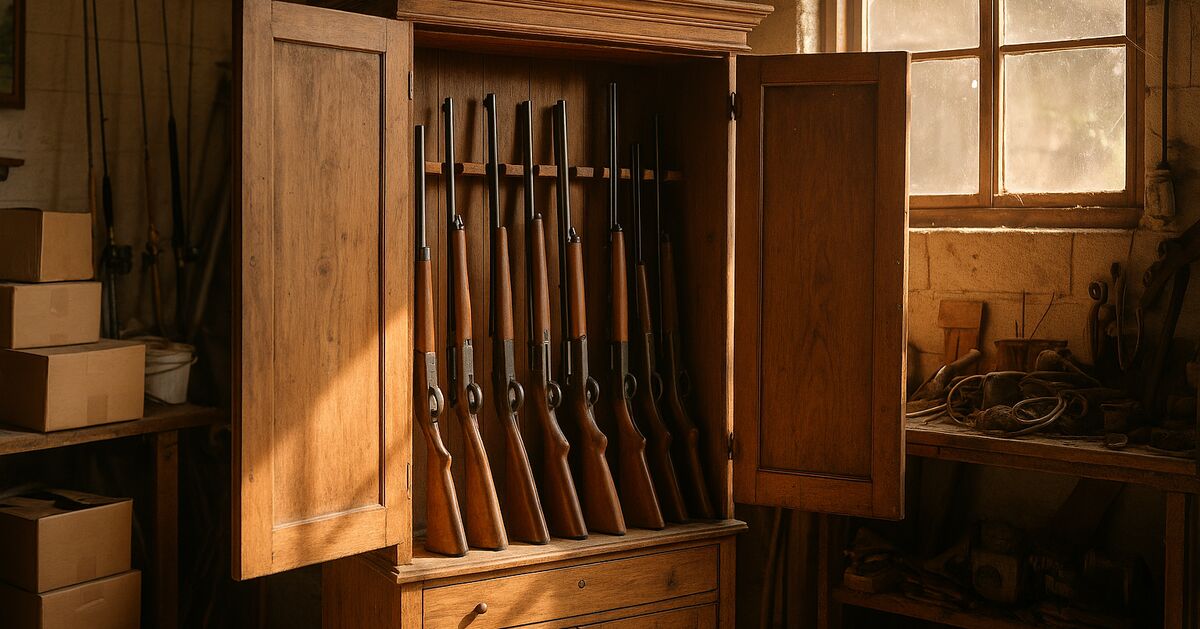
Firearms turn up in estate cleanouts more often than most people expect, and the moment you find one, the rules of the cleanout change completely. A gun collection is not a box of old magazines or a garage full of tools. It carries legal obligations, real dollar value, and genuine safety concerns all at once. If you are in the middle of a Sarasota estate cleanout and you just pulled open a closet door or a locked cabinet and found firearms, take a breath, follow the steps below, and resist the urge to just "deal with it later."
This post walks through every practical decision you will face: who can legally touch the guns, where they can go, how to document what you found, and how a junk hauler fits into the picture (hint: we do not haul firearms, but we do haul everything else around them).
Stop and secure the area first
The very first thing to do when firearms are discovered is to treat every single one as if it is loaded. That is not an overreaction. It is the standard practice of every gun shop, law enforcement officer, and estate professional who works with firearms regularly. Do not pick them up, rack the slide to check the chamber, or move them to a different room until a person who knows safe handling procedures is present.
If you are alone in the house, close the room, note the location, and do not let anyone else in until you have a plan. If children are present anywhere on the property, get them out and away from that area immediately. This single step prevents the vast majority of accidents that occur during estate cleanouts.
Understand who legally has the right to handle the firearms
Florida and federal law both have opinions about who can handle and transfer firearms from a deceased person's estate. Here is the short version without the legal jargon.
The personal representative (sometimes called the executor) named in the will has authority to take possession of firearms as part of the estate. If there is no will, the court-appointed administrator has that authority. A family member who simply shows up and decides to take a gun home without going through proper legal channels can inadvertently create a problem, even when their intentions are completely good.
If the estate is in probate, the firearms are technically estate property, and their handling is governed by that process. It is always worth a quick call to the estate attorney before anyone moves the guns to a new location. That call takes fifteen minutes and can prevent headaches that last months.
If you are not sure where the estate stands legally, our post on cleaning out a Sarasota home when there's no will and no clear next of kin covers the bigger picture of how authority works in ambiguous situations.
Document everything before anything moves
Before a single firearm leaves the room, document the collection thoroughly. This matters for insurance purposes, estate accounting, potential sale, and legal compliance. Walk through the space and do all of the following.
- Photograph every firearm from multiple angles, including any visible serial numbers, manufacturer markings, and the overall condition.
- Note the make, model, and caliber of each gun if you can read it on the firearm itself.
- Count every box of ammunition and photograph it in place.
- Document any accessories: holsters, cleaning kits, cases, scopes, magazines, and safes.
- If firearms are stored in a gun safe, photograph the safe itself and its contents before anything is removed.
This documentation protects everyone involved, from the heirs to the estate professionals to anyone who eventually purchases the collection. It also gives an appraiser a head start.
Get a professional appraisal before you make any decisions
Gun collections vary in value enormously. A rack of inexpensive hunting rifles used every deer season is worth one amount. A collection of pre-war revolvers, rare military surplus pieces, or custom-built competition firearms is worth something entirely different. Without an appraisal, heirs have no way to make good decisions about what to keep, sell, or transfer.
There are licensed firearms appraisers in the Sarasota area, and most gun dealers who handle used firearms will at least give you a ballpark. For higher-value collections, look for an appraiser with credentials from a recognized organization who specializes in firearms. The cost of a proper appraisal is almost always recovered in a better sale outcome.
Do not skip this step because someone in the family "knows guns." A family member may genuinely know a great deal about firearms, but personal familiarity is not the same as a documented, defensible appraisal for estate purposes.
The legal options for what to do with the firearms
Once the collection is documented and appraised, you have a handful of paths forward.
Transfer to an heir or family member. Florida law allows a personal representative to transfer firearms to an heir. For long guns (rifles and shotguns), no federal background check is required for transfers within a family. For handguns transferred out of state, federal law applies. Any transfer to someone who is not a family member must go through a licensed dealer who can conduct the proper background check. Do not skip this step to save time or the dealer's fee.
Sell through a licensed firearms dealer (FFL). This is the most common route when the heirs do not want the guns. A local FFL dealer can either purchase the collection outright or sell on consignment. Outright purchase is faster but typically yields less money. Consignment takes longer but usually gets closer to market value. Bring your documentation and the appraisal to that first conversation.
Sell at auction. Firearms auction houses, including several that operate nationally with online bidding, specialize in exactly this kind of estate collection. For valuable or rare pieces, auction can outperform a local dealer sale significantly. This process takes time, often six to twelve weeks from submission to final payment, so plan accordingly if the estate needs to close quickly.
Surrender to law enforcement. If no heir wants the firearms and the family has no interest in selling them, firearms can be surrendered to law enforcement. Sarasota County Sheriff's Office accepts firearm surrenders. This is a permanent, no-paperwork-for-you option that gets the guns off the table entirely. You will not receive any compensation, but you will have handled the situation cleanly and legally.
Render inoperable and dispose. A licensed gunsmith can permanently deactivate firearms in a way that meets legal standards. This is occasionally done with sentimental pieces that no one wants to keep functional but no one wants to part with entirely. It is not a common route, but it exists.
What about ammunition and accessories?
Ammunition cannot be thrown in a dumpster or hauled to the curb. It is not an item a junk hauler can pick up as part of a standard cleanout. However, it has real value and real disposal options.
- Gun shops and ranges often buy or accept ammunition.
- Ammunition can be transferred to an heir or family member who hunts or shoots.
- Local shooting ranges sometimes accept donations of common calibers.
- For unwanted ammunition with no takers, the Sarasota County Household Chemical Waste program can help with proper disposal guidance, as ammunition is considered a hazardous material in disposal contexts.
Gun safes, holsters, cleaning equipment, cases, and scopes are a different story. Those items have no legal restrictions and can be sold, donated, or hauled away just like any other personal property. A gun safe itself, depending on size and weight, may require special handling during removal. We cover similar challenges with heavy and oversized items in our post on hot tubs, pianos, and oversized items in cleanout situations.
What a junk hauler's role actually is in all of this
To be direct: a legitimate junk hauling company does not haul firearms or ammunition. That is not a limitation we apologize for. It is the law, and it is the right boundary.
What we do is handle everything around the firearms once they have been properly addressed. The boxes of miscellaneous gear in the same closet. The storage shelving. The gun cases once they have been emptied. The cleaning supplies. The safe itself if it needs to be removed. The rest of the house, garage, shed, and outdoor space that is part of every real estate cleanout.
Firearms often live alongside a lot of other outdoor and sporting gear, as we have seen again and again in cleanouts across Venice, North Port, Englewood, and throughout Sarasota County. Our team focuses on the hauling side while you or your estate attorney handle the firearm-specific steps. The two processes run in parallel, and the cleanout does not have to grind to a halt just because firearms are present.
Our full range of estate cleanout and junk hauling services is built around exactly this kind of situation: homes with complicated contents that need to be sorted and cleared carefully, not just scooped into a truck.
A note on collections found in unexpected places
Gun collections found during estate cleanouts are not always neatly stored in a gun safe in the master bedroom closet. We have seen firearms found in the following places during cleanouts across Sarasota County.
- Behind false walls or under floorboards in older homes.
- Wrapped in cloth and stored in boxes labeled as something else entirely.
- Inside hollowed-out furniture.
- In outbuildings, sheds, and garages.
- In storage units that were part of the estate.
- In vehicles parked on the property.
If you are conducting a thorough cleanout and you find something unexpected, the same rules apply regardless of where it was stored. Secure it, document it, and bring in the right people before it moves.
This is one reason thorough estate cleanouts benefit from professional help. Experienced cleanout crews recognize when they are encountering something that falls outside normal junk hauling and know to stop and flag it. That matters.
Working with the rest of the estate while firearms are being sorted
One of the most practical concerns families face is that the firearms situation creates a delay in the broader cleanout. The house may need to be cleared on a deadline, either for sale, a lease transition, or to avoid carrying costs. Here is how to keep things moving without cutting corners on the legal side.
Work in zones. The room or area where firearms are stored can be secured and addressed on its own timeline while the rest of the property moves forward. A bedroom full of furniture, a kitchen full of dishes, a garage full of tools, those areas do not need to wait. A competent cleanout crew can work around a locked or secured room without any problem.
Communicate the situation clearly to whoever is managing the estate, including the attorney, the real estate agent if the home is being sold, and the heirs. Everyone benefits from knowing there is a plan for the firearms rather than discovering midway through closing that the situation was never resolved.
For families managing the broader complexity of a Sarasota estate cleanout, including disagreements about personal property and who gets what, our post on Sarasota estate cleanout when heirs can't agree on what to keep addresses a lot of the interpersonal and logistical friction that comes up.
The bottom line
Finding a gun collection during an estate cleanout in Sarasota is a manageable situation. It requires a few deliberate steps in the right order, a couple of professionals who know their areas of expertise, and some patience. It is not a crisis, and it is not something to rush through.
Secure the firearms. Document everything. Get an appraisal. Choose a legal path for disposition. Then let the rest of the cleanout proceed.
If you are in the middle of a cleanout in Nokomis, Osprey, Longboat Key, Siesta Key, or anywhere else in the area and you have questions about how we can help with everything outside the firearms themselves, reach out to us directly. We are glad to talk through the situation and help you figure out what makes sense for your timeline and your property.
You can also browse our frequently asked questions for more on what we do and do not haul, or explore all the locations we serve across Sarasota County and beyond.